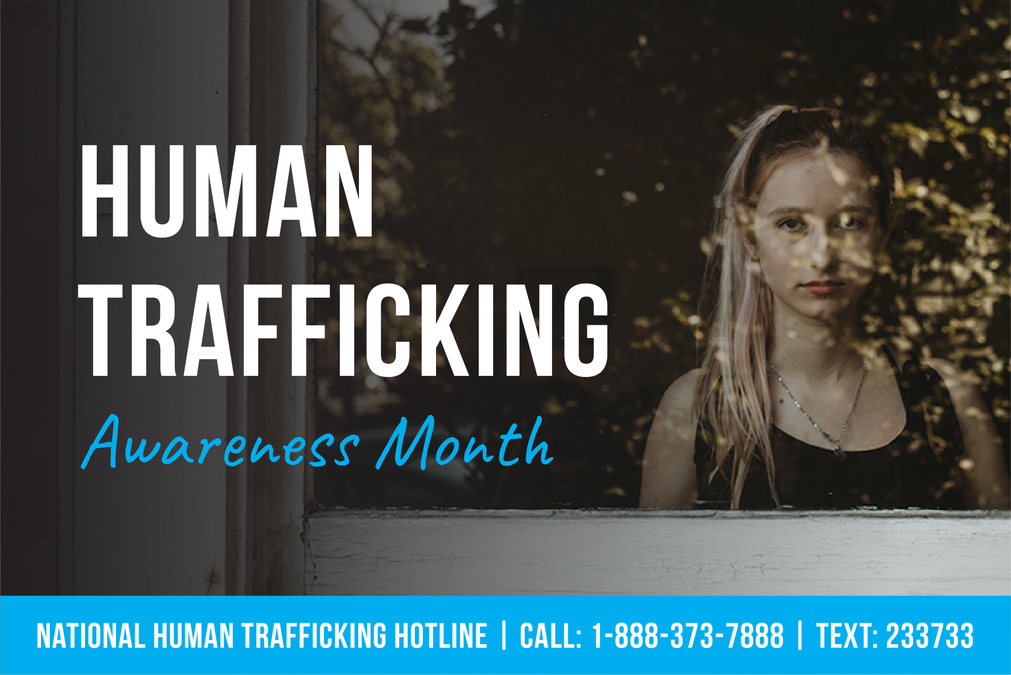
As California marks Human Trafficking Awareness Month, a recent Stanislaus County case has brought renewed attention to the issue and the ongoing efforts of local organizations and law enforcement to combat it.
On Dec. 31, 2025, detectives with the Stanislaus County Sheriff’s Office Special Victims Unit and the county’s Human Exploitation and Trafficking (HEAT) Task Force began searching for a missing 14‑year‑old Patterson girl believed to be a trafficking victim. After an intensive, day‑long effort, the teen was safely located on Jan. 1. Two 19‑year‑olds from San Francisco — Bexy Arellanes and David Samaniego — were arrested and booked into the Stanislaus County Public Safety Center on suspicion of human trafficking of a minor. The investigation remains ongoing.
The case reflects a broader statewide trend. California continues to report some of the highest human trafficking numbers in the nation. According to the National Human Trafficking Hotline, the state has generated 54,442 trafficking‑related signals, leading to the identification of 16,780 cases and 31,764 victims since the hotline began tracking data.
The California Department of Justice notes that human trafficking is one of the world’s fastest‑growing criminal enterprises, generating an estimated $150 billion globally each year. The DOJ emphasizes that trafficking does not require transportation across borders; victims can be exploited entirely within their own communities through force, fraud or coercion.
Locally, the nonprofit Without Permission has spent more than a decade working to prevent trafficking, support survivors and educate the community. Founded by the late Debbie Johnson, the organization grew from a single information booth in 2011 into one of the region’s most active anti‑trafficking groups. In its first two years, Without Permission assisted more than 400 victims and families, and its outreach has since expanded to schools, juvenile facilities, churches and community agencies.
The group’s work includes survivor restoration, trauma‑informed support and long‑term healing. Its day center, Just His House, provides counseling, group therapy and resources for victims rebuilding their lives. Without Permission reports that more than 40 percent of the survivors it has served are under age 18, with its youngest just 11 years old. More information about the organization and its programs is available at:
https://withoutpermission.org
Advocates say many trafficking cases begin not with abduction but with grooming — a manipulative process in which traffickers build trust, isolate victims and gradually exert control. Social media often plays a role, and traffickers frequently target vulnerabilities such as unstable housing, family conflict or emotional insecurity.
As Human Trafficking Awareness Month continues, local agencies and nonprofits are urging residents to learn the warning signs, report suspicious activity and support survivor‑focused organizations. The safe recovery of the Patterson teen, they say, is a reminder that community vigilance and coordinated response can save lives — and that the work to prevent exploitation remains far from over.