BY VIVIENNE AGUILAR
CV Journalism Collaborative
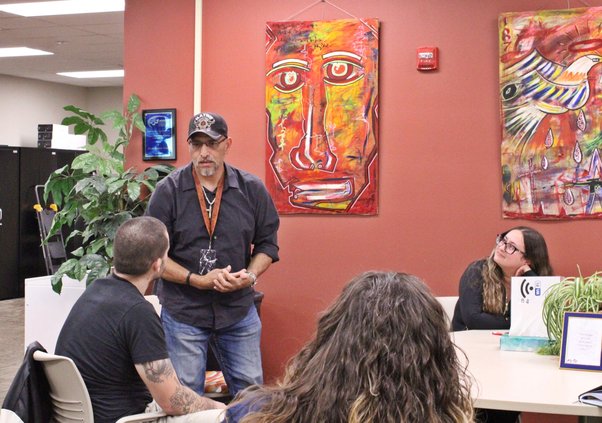
As students in the Rising Scholars Network’s weekly meeting asked a virtual attendee to unmute themselves over Zoom, someone joked, “Do we have to ‘press 5’ to accept the call?”
It was a lighthearted reminder of the automated voice one hears when accepting a collect phone call from inside a jail or prison facility. It got mixed reactions, as many students in the room reflected on challenges they still face as result of crimes they’ve already atoned for.
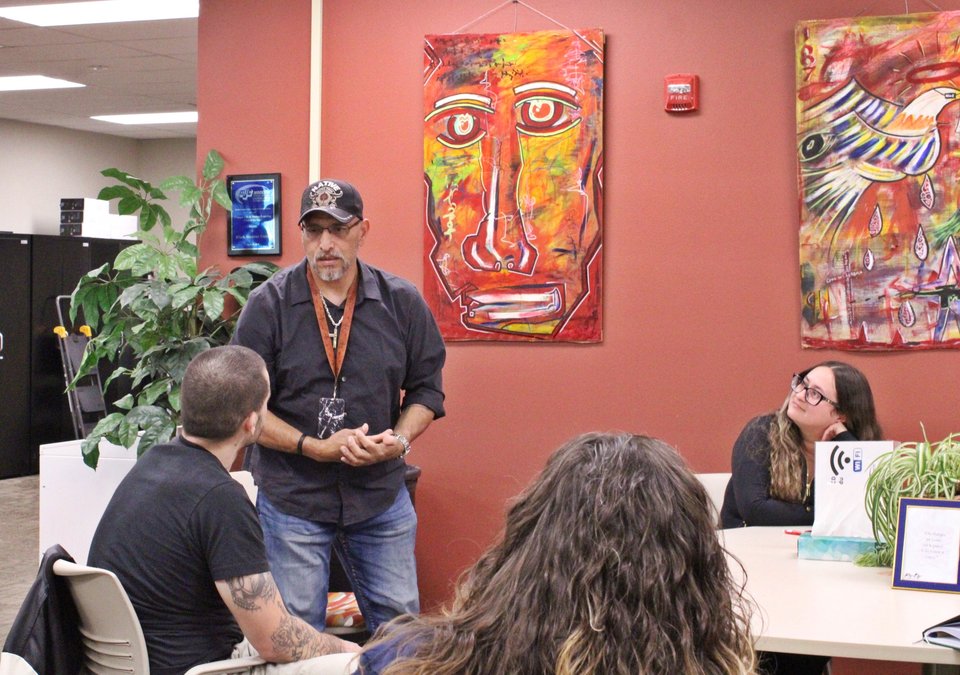
Each semester, students in the Rising Scholars Network at Modesto Junior College help one another navigate school, life, court dates and the expungement process.
The program, established locally in 2018, lives in MJC’s Rise Up Center, on the east campus, which hosts affiliate groups dedicated to supporting undocumented, LGBTQ+, Latinx and Black students.
The Rising Scholars Network (RSN), established in 2014, is a statewide program dedicated to supporting community college students who have been impacted by the criminal justice system. Modesto’s program is one of several across the San Joaquin Valley. Community colleges in Stockton, Merced, Madera and Fresno also host the program.
In an effort to reduce recidivism, or keep people from reoffending, California has designed programs like RSN to give justice-impacted people extra support so they can earn college degrees. Research shows people who earn a degree after incarceration are 43% less likely to return to prison.
Community members who have parents, siblings in the system are considered “justice-impacted” because the trauma caused by incarceration affects their lives as well.
Between 2025 and 2028, MJC will receive more than $500,000 for the program. Scholars on campus receive mentorship, academic counseling, peer support and free transportation on StanRTA buses.
MJC sociology professor Melanie Berru and RSN Program Specialist David Lujan established partnerships with Reentry, Enhanced Alternatives to Custody Trainings (REACT) Center and Stanislaus County Juvenile Hall in Modesto, and the California Health Care Facility in Stockton.
Recruitment for the program can start inside incarceration facilities, bringing students to the college before their release date. This year, Berru said several people being held at the REACT Center planned to join her course this spring, but couldn’t because their sentences ended before the course.
In those cases, she urged them to enroll in classes on campus. Today RSN supports roughly 250 students who have been formerly incarcerated or justice-impacted.
That includes students like Troy Chum, a 22-year-old history major at MJC, whose guardians were involved in the justice system. He was in Boy Scouts when he was growing up in Ceres, but then life put him on another, sometimes isolating, path.He joined the program because it offers unique support in ways other campus groups don’t.
Because of his experiences with the justice system, Chum said his way of communicating and other mannerisms have been misinterpreted by students in his traditional classes. Halfway through this semester, he said some even went to the professor to say they felt “bothered” by his presence.
The complaint stunned Chum, who has turned to his fellow RSN students for support and understanding.
“I’m never trying to make anyone feel uncomfortable,” he said through tears. His peers hugged him, validated his frustrations and told him to keep going.
Several members drew from sociology lessons to help one another name the barriers they’re experiencing on their academic journeys.
Many said having those lessons taught inside local jails is vital because it gives incarcerated students hope that there are classmates outside who share their struggles.
“Word (about the group) is catching like wildfire, for sure, and the excitement is definitely spreading. Everyone was super excited, kind of bright eyed and bushy tailed,” Berru told the group at last week’s meeting.
While serving sentences, scholars in the program have access to adult education transitions programing, general education and transfer-level college courses, depending on the facility where they’re serving time.
The Rising Scholars Network currently reaches over 100 currently-incarcerated students: 30 at the Stanislaus County Public Safety Center (REACT), 70 students at the California Health Care Facility (CHCF), and 12 students at the local juvenile facility.
Lujan, one of the program’s first graduates and an alumni of UC Merced, said that camaraderie is vital for people impacted by the justice system. After spending 35 years behind bars after receiving a life prison sentence while still a juvenile, he built MJC’s Rising Scholars Network into what it is today.
Berru and Lujan teach the students how to look at the socioeconomic factors that likely influenced the choices that led them into contact with the justice system.
Several scholars said Berru’s courses helped them identify injustices they’d faced before getting arrested. For example, several students recalled how elementary school teachers were the first to tell them they were likely to end up in jail.
This phenomenon is called the school-to-prison pipeline, and the Rising Scholars Network is designed to address and even reverse its effects on historically marginalized communities.
“Education gave me the language to understand (the phenomenon),” Lujan said. “I saw it in my own life, and I saw it in the lives of other people. But I think education did give me the language to be able to understand that right. And so it just confirmed what I was already feeling, was what I was already seeing.”
Within her classes at the REACT Center, Berru said the majority of her students identify with this feeling. Having that reference teaches them how to look at their lives through the lens of sociology to make “the invisible, visible”.
Despite it being nearly two decades since her crime, Isabel Andrade, who works the front desk in the Rise Up Center, still feels the weight of all the invisible tension that stems from her involvement in the justice system.
Andrade, who is working towards a bachelor’s degree in psychology at Stanislaus State, spoke to the RSN group recently about her ongoing efforts to expunge her criminal record. Despite her academic and personal accomplishments, Andrade is still tied to traffic violations from 2008.
“I got news that (Stanislaus County District Attorney’s Office) denied my appeal,” she said. “I feel like I don’t even know myself when I read the way they talk about me. The letter said it was denied because I ‘pose a threat to individuals and society’.”
She cried.
In order to clear her record, she will have to spend many more days in court, with lawyers and away from her studies and daughter.
In 2023, Andrade was one of Berru’s first sociology students in the REACT Center. She graduated from MJC last fall with three associates degrees in psychology, social behavioral sciences and sociology.
Aside from studying, parenting and working in the Rise Up Center, she is also an Underground Scholars Ambassador and member of Stan State’s Project Rebound.
Several scholars at the meeting reassured Andrade that her presence at the front desk was one of the first reasons they got involved themselves. Earlier this month, Andrade received the Soroptimist International of Oakdale’s Live Your Dream Award.
Andrade’s peers encouraged her to try again and offered local resources. The group reassured each other that the legalese on paper didn’t reflect who they were to each other, and especially to themselves.
According to a 2021 “incarceration at a glance” study by the Vera Institute of Justice, in Stanislaus County 81% of people held in county jails had not been convicted, and 71% of arrests were misdemeanors.
After the end of every semester in the REACT Center on Hackett Road in Modesto, scholars visit their incarcerated counterparts to showcase the welcoming community they’ve heard about from their teacher.
“There’s a school to prison pipeline. We’re doing the jail/prison pipeline to college,” Berru said.
— Vivienne Aguilar is a reporter for The Modesto Focus, a project of the Central Valley Journalism Collaborative. Contact her at vivienne@themodestofocus.org.