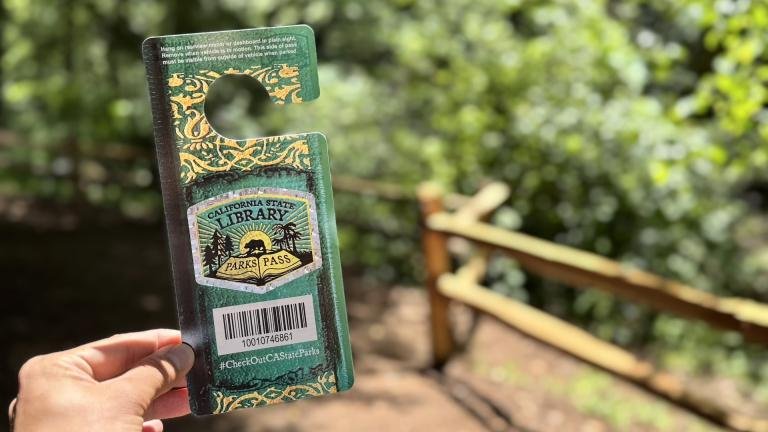
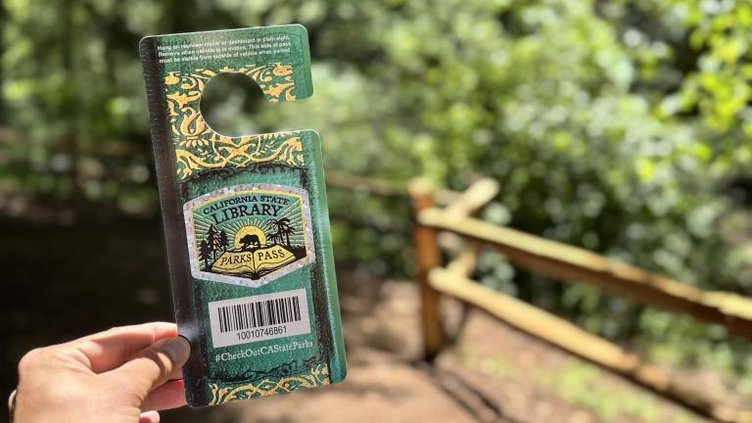
California State Parks Foundation applauded the introduction of new legislation that would help ensure the future of the incredibly popular California State Library Parks Pass. The California State Library Parks Pass gives library card holders free vehicle day-use entry to over 200 participating state parks. Since the start of the program, thousands of passes have been distributed to more than 1,100 public libraries throughout the state.
Introduced by Assemblymember Gregg Hart (D-Santa Barbara), AB 1804 would authorize the California Department of Parks and Recreation to work with the California State Library and individual library systems to provide these park passes.
“The California State Library Parks Pass program is helping more Californians access nature,” said Rachel Norton, Executive Director of California State Parks Foundation. “Thanks to this initiative, we’re breaking down barriers to visiting state parks and opening up opportunities for Californians to enjoy the physical and mental benefits of spending time outdoors. AB 1804 is an important step forward for the program and will help ensure its future.”
The California State Library Parks Pass first started in 2021 with 5,000 available passes. Due to the popularity of the initiative, the program was expanded significantly in 2022 to include 33,000 passes. Library card holders can check out the passes and then return them for others to use. Libraries report that these passes are among their most checked-out items. At select library locations, participants can also check out a backpack along with the pass, with gear like binoculars, compasses, and wildlife guides.
“The State Library Parks Pass program is a true California gem,” said Assemblymember Hart. “I’m proud to introduce this legislation to codify the program, which dedicates free day-use entry passes for residents to state parks through their local library. With State Parks and the State Library working together, we can ensure continued access to our wonderful natural treasures for more Californians.”
In 2023, California State Parks Foundation released compelling survey data highlighting the success of the California State Library Parks Pass program. The survey yielded these key insights, which show the impact and importance of the program:
- 63% cited cost as the primary barrier to visiting state parks.
- 90% said they now plan to visit parks many more times each year.
- Nearly 70% reported household incomes below $60,000.
- Over 63% identified as Black, Indigenous, or People of Color.
The California State Library Parks Pass program is one of three equity-focused pilot programs introduced by Governor Newsom and First Partner Jennifer Siebel Newsom in 2021 to support the state’s California for All vision. The initiative was part of the California Natural Resources Agency’s “Outdoors for All” framework, which outlines goals to expand parks in underserved communities, support access programs, and foster a sense of belonging for all Californians in the outdoors.
Despite its immense popularity and value, the California State Library Parks Pass program currently has no permanent funding and relies on an annual appropriation in the state budget. This has repeatedly resulted in uncertainty for the program’s future. In the FY 25 budget cycle, the proposed state budget did not include funding for the program. California State Parks Foundation mobilized thousands of Californians to contact their legislators, and funding was ultimately restored in a last-minute budget agreement. In the FY 26 budget cycle, Governor Newsom proposed funding for the pass, but it was omitted in the Legislature’s final budget. Once again, advocacy by thousands of Californians led to restored funding for the program late in the budget process. Currently, the program is funded through the end of 2026.
AB 1804 helps address this challenge by explicitly authorizing California State Parks to work with the California State Library to provide and distribute passes each year. The legislation creates an ongoing structure for the program in the state’s Public Resources Code, making it more likely that passes will be funded on an ongoing basis, while still maintaining budget flexibility for the state.