
Those wishing to not only watch, but also participate in future Turlock City Council meetings while in the comfort of their living room will soon able to thanks to a new law that will go into effect July 1.
Remote public comment capability is just one mandate under SB 707, which also adds new translation, and outreach requirements, creates new exemptions from certain teleconferencing rules and extends several sunsetting Brown Act laws.
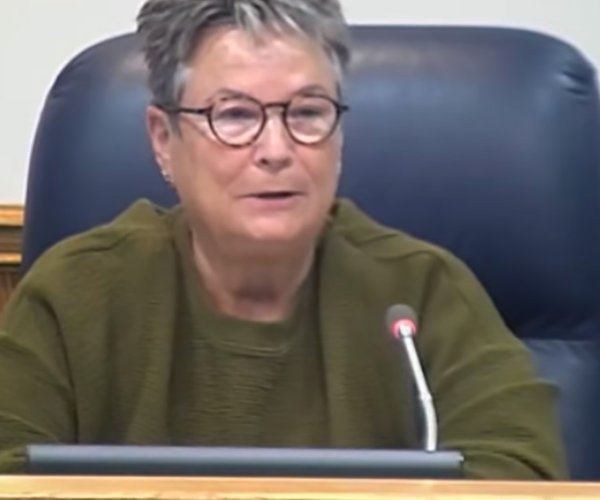
A member of the public brought up the new SB 707 mandates during the Feb. 10 Turlock City Council meeting, which led to an update by Turlock City Clerk Nichole Fiez.
“We’ve been up to date probably since October tracking this bill moving through the system. We’re actively working with the IT department to get the council chambers ready to host that audio and visual accessibility. We’re also working with the legal department to make sure that we’re in compliance with the Brown Act and with accordance to what that means for the members of the public and what that means for staff,” said Fiez.
Here are few highlights of the bill:
— Remote public comments
An eligible legislative body must provide the public with a way to attend meetings and comment via a “two-way telephonic” or “two-way audiovisual platform.”
The bill describes a two-way telephonic service as a one “that does not require internet access and allows participants to dial a telephone number to listen and verbally participate.” A two-way audiovisual platform is defined as an “online platform that provides participants with the ability to participate in a meeting via both an interactive video conference and a two-way telephonic service.”
— Internet service interruptions
An eligible legislative body must adopt, at a noticed public meeting in open session (not on consent), a policy on disruptions to telephonic or internet service. The policy must include the following:
- If a disruption prevents public participation through two-way telephonic or audiovisual platforms, the body shall recess open session for at least one hour and attempt in “good faith” to restore service.
- The body may meet in closed session during the recess.
Open session may not reconvene until at least one hour has passed or service is restored, whichever comes first. - If service is not restored, the body may resume only after adopting, by roll call vote, a finding that good faith efforts were made and that continuing the meeting outweighs the public’s interest in remote access.
— Reasonable translation assistance
An eligible legislative body shall “reasonably assist” members of the public who wish to translate a public meeting into any language or wish to receive an interpretation provided by another member of the public, so long as it does not disrupt the meeting.
An eligible legislative body shall publicize how to request assistance. Assistance may include any of the following, as determined by the eligible legislative body:
- Arranging space for one or more interpreters at the meeting location.
- Allowing extra time during the meeting for interpretation to occur.
- Ensuring participants may utilize their personal equipment or reasonably access facilities for participants to access commercially available interpretation services.
- This section does not actually require an eligible legislative body to provide interpretation services itself. Nor is the eligible legislative body responsible for the content or accuracy of any interpretation facilitated, assisted with, or provided.
The bill does not define what “reasonable” means.
— City-provided agenda translations
The agenda for each meeting of an eligible legislative body shall be translated into all “applicable languages.” Each translation shall include instructions in the applicable language describing how to join the meeting by the telephonic or internet-based service option, including any requirements for registering public comment.
The accessible internet webpage shall be translated into all applicable languages. Each translation shall be accessible through a prominent direct link posted on the primary website home page of the eligible legislative body.
A translation made using a digital translation service shall satisfy the requirements. The bill expressly states that the agenda translation requirement does not apply to the entire agenda packet.
For purposes of this bill, “applicable languages” means languages, according to data from the U.S. Census Bureau’s most recent American Community Survey, spoken jointly by 20% or more of the city’s population, provided that 20% or more of the population that speaks that language speaks English less than “very well.”
— Local outreach
An eligible legislative body must take the following steps to encourage public participation in meetings:
- Provide a system to electronically accept and fulfill agenda requests (via email or an agenda management platform), with a prominent link on the body’s home page.
- Maintain a dedicated, accessible webpage for public meetings that includes or links to:
A general explanation of the meeting process.
Instructions for submitting oral (in-person or remote) or written public comment.
A calendar, with the date, time, and location of each meeting.
— Alternative teleconferencing rules
SB 707 extends the existing AB 2449 alternative teleconferencing provisions until Jan. 1, 2030. AB 2449 authorizes limited remote participation from undisclosed locations due to “just cause” and “emergency circumstances.” As related to AB 2449, it also:
- Allows members with certain military service obligations that result in them being unable to attend in person to use this provision.
- Removes the requirement for the legislative body to approve each instance a member wants to participate remotely for “emergency circumstances,” and applies the same rules for participating remotely for “just cause” to “emergency circumstances.”
- Requires that the minutes for the meeting identify the specific provision that each member relied upon to participate remotely. This subdivision shall not be construed to require the member to disclose any medical diagnosis, disability, or any personal medical information that is otherwise exempt under existing law.
- Additionally, the bill confirms that members of legislative bodies with physical or mental disabilities may participate remotely per the Americans with Disabilities Act and count towards any applicable in-person quorum requirements.