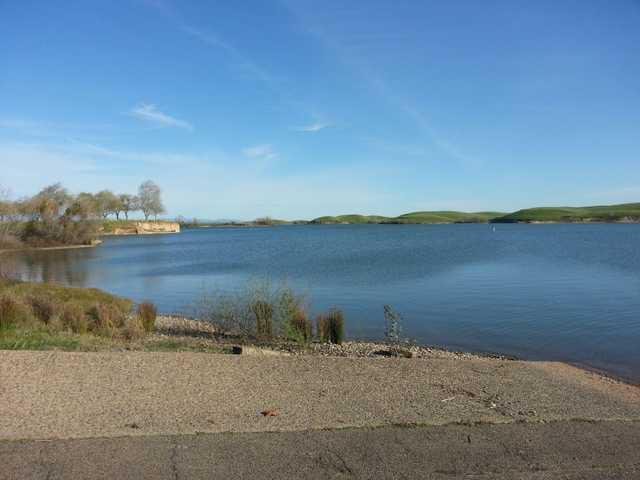
Stanislaus County supervisors on Tuesday will consider a series of agreements that would allow the county to take over operations at Turlock Lake State Recreation Area and begin more than $8 million in improvements needed to reopen the park after a six‑year closure.
The proposal includes a Joint Powers Agreement with California State Parks and Turlock Irrigation District, a long‑term lease for the county to operate recreation at the lake, and a Public Entity Agreement that would deliver nearly $8.2 million in state funding for capital upgrades and start‑up costs. Turlock Lake, located at 2260 Lake Road in La Grange, has been closed since 2020, when the previous concessionaire ended operations and it was closed to prevent a surge of visitors during COVID-19. The 26‑mile shoreline reservoir had long served as a summer recreation destination, with peak use between Memorial Day and Labor Day.
A facility assessment completed in 2024 found extensive repair needs across day‑use areas, restrooms, parking lots, the boat launch, pump houses and maintenance buildings. Under the proposed agreement, the state would provide $7.5 million for those improvements, $556,000 for the first two years of start‑up operations, and $143,000 for a three‑year lease of a security surveillance trailer. All state funds must be deposited into an interest‑bearing account, with interest dedicated to Turlock Lake improvements and operations.
The county and TID have negotiated a 10‑year lease, renewable in 10‑year increments, with an annual rent of $1. TID owns the property, the state will fund improvements, and the county will manage recreation services. Once reopened, the county plans to offer day‑use recreation, fishing, non‑motorized watercraft rentals, a waterpark feature, special events and seasonal waterfowl hunting. Motorized boats would be limited to small engines at 5 to 10 mph, and alcohol would be prohibited within the recreation area. Law enforcement services currently assigned to Woodward Reservoir would shift to Turlock Lake following the termination of the county’s agreement with South San Joaquin Irrigation District.
A three‑year financial projection shows the park will require a one‑time $90,000 contribution from the District 2 Community Development Fund in its first year, break even in the second year and become fully self‑sustaining by Year 3. District 2 has a current balance of $640,695, and the countywide Community Development Fund totals $1.99 million. The county will establish a Turlock Lake SRA Enterprise Fund to receive state dollars and cover capital improvements and one‑time equipment purchases. The operations budget will be established in a future budget cycle.
In Year 1, the county projects $385,000 in charges for service and $424,000 in one‑time state revenue, along with the $90,000 Community Development Fund contribution, for a total of $899,000. Costs are estimated at $898,722, leaving a net of –$278. Year 2 revenue is projected at $747,500, with $747,649 in costs and a net of $149. Year 3 revenue is projected at $580,000, with $529,345 in costs and a net of –$50,655, though the county anticipates operations will be self‑sustaining through department‑generated revenue. A preliminary staffing plan includes four full‑time positions—a park supervisor, a Park Maintenance Worker III and two Park Maintenance Worker I/II positions—supplemented by seasonal staff. Full‑time positions would split time between Turlock Lake and the La Grange/OHV Park based on seasonal needs.
Because construction on Phase 1 improvements will extend through 2026, Turlock Lake will not reopen for the 2026 summer season. Some recreation opportunities may be available in 2027, depending on construction progress and safety conditions. Supervisors must approve the Joint Powers Agreement, the lease with TID, the Public Entity Agreement with the state and the establishment of an interest‑bearing fund to hold state dollars and earned interest. The $90,000 Community Development Fund allocation also requires board approval because it exceeds the $5,000 threshold.
If approved, the agreements would mark the first major step toward restoring public access to one of the region’s most significant outdoor recreation assets.