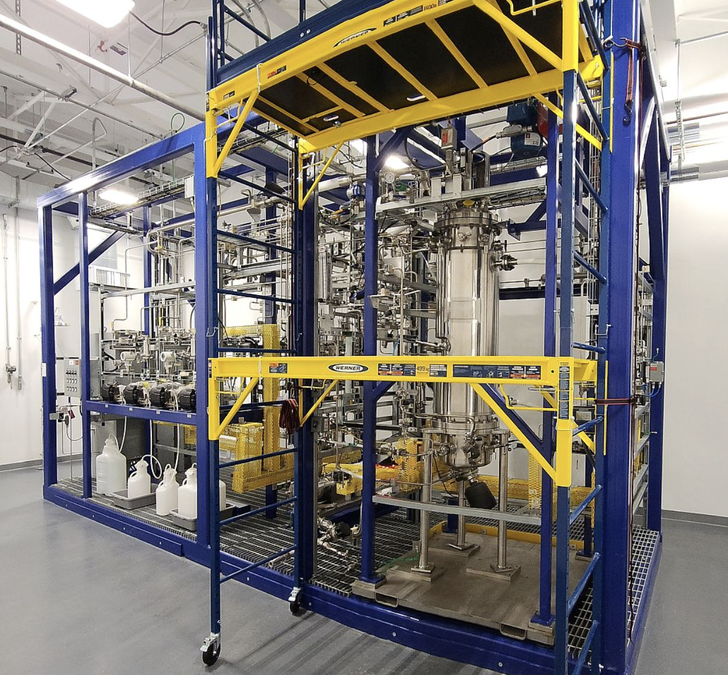
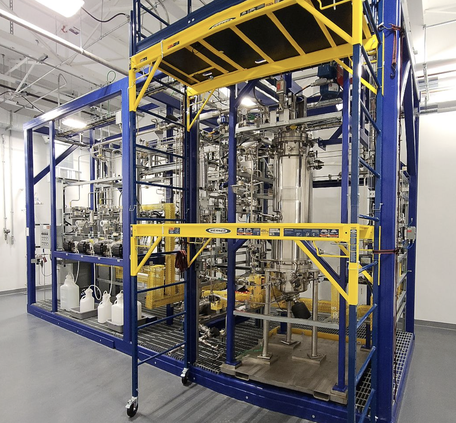
MODESTO — A major piece of technology that could shape the future of agriculture and clean manufacturing in the Central Valley is on its way to Stanislaus County. BEAM Circular announced this week that it has acquired a state‑of‑the‑art gas fermentation pilot system — a rare, 130‑liter bioreactor capable of turning methane and carbon dioxide into useful products such as sustainable proteins, fuels, chemicals and biodegradable materials.
The system will anchor the developing California Bioeconomy Innovation Campus, a regional biomanufacturing hub supported by Stanislaus County, North Valley Thrive and the State of California. The project is backed by a $10.4 million California Jobs First grant and an $8 million state budget allocation aimed at expanding circular‑economy manufacturing in the Central Valley.
For local communities — where dairies, food processors and wastewater facilities generate large volumes of methane — the technology represents a potential new revenue stream and a way to reduce climate‑warming emissions.
“This investment is a game‑changer for California and for the U.S. bioeconomy,” said Karen Warner, CEO of BEAM Circular. “By providing open‑access pilot infrastructure, we’re helping innovators turn waste gases into opportunity by supporting new companies, new products, and new jobs that advance a more sustainable and prosperous future for local communities.”
Gas fermentation systems like the one BEAM acquired are extremely rare in the United States, leaving many emerging companies without a place to test and scale their technologies. The new unit fills that gap, offering a platform that can work with multiple gas sources — including those common on the Westside, such as dairy digesters and wastewater treatment plants.
While the Innovation Campus is still under construction, the bioreactor will be temporarily housed at Mango Materials’ production facility in Vacaville. Mango Materials is internationally recognized for converting methane into PHA, a fully biodegradable polymer already being used in consumer products. The company currently sources methane from the Easterly Wastewater Treatment Plant.
Through the partnership, BEAM Circular and Mango Materials will offer fee‑based research and pilot services to companies developing gas fermentation technologies. The system’s modular design allows it to adapt to different gases and microbial systems, giving innovators a realistic testbed before moving to commercial scale.
“Mango Materials is thrilled to partner with BEAM Circular to expand access to gas fermentation scale‑up capacity,” said CEO Dr. Molly Morse. “This partnership will allow more innovators to bring climate‑positive solutions to market faster.”
The new system will also strengthen BEAM Circular’s collaboration with Lawrence Berkeley National Laboratory, which provides advanced bioprocessing support through its Advanced Biofuels and Bioproducts Process Development Unit.
For Stanislaus County — and especially the Westside, where agriculture and food production dominate the economy — the Innovation Campus could eventually create new markets for waste gases, new manufacturing jobs and new opportunities for local producers to participate in the growing bioeconomy.
BEAM Circular, based in the North San Joaquin Valley, leads statewide initiatives focused on transforming waste into valuable products and building inclusive economic opportunity. Mango Materials, headquartered in California, is known for its methane‑to‑materials platform and sells its biodegradable PHA under the brand name YOPP.
The gas fermentation system will be relocated to the Innovation Campus once construction is complete, where it will serve as a cornerstone of what BEAM describes as a “world‑class innovation ecosystem” linking research, industry and manufacturing in the Central Valley.