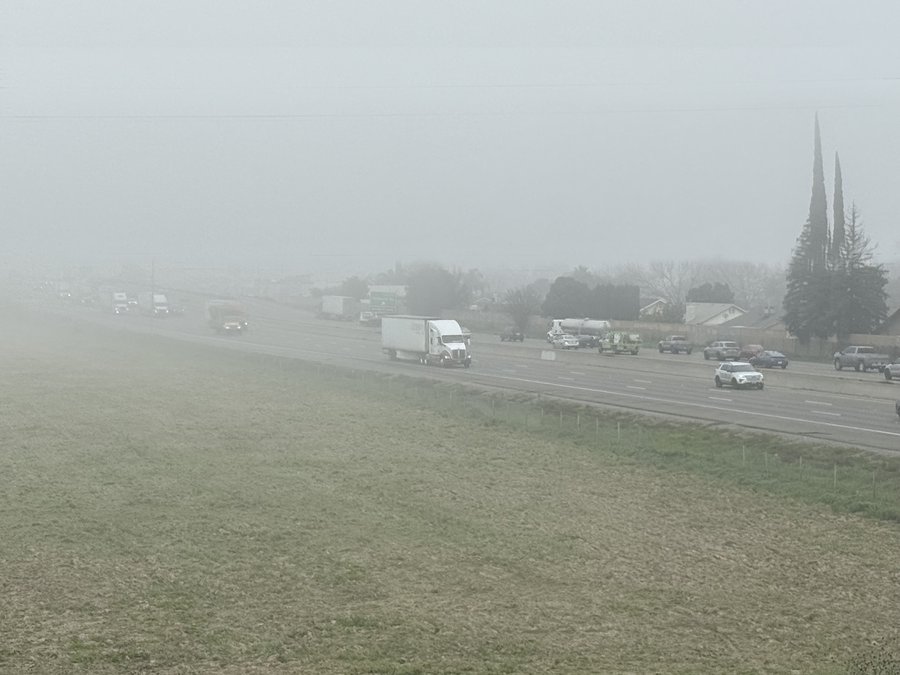
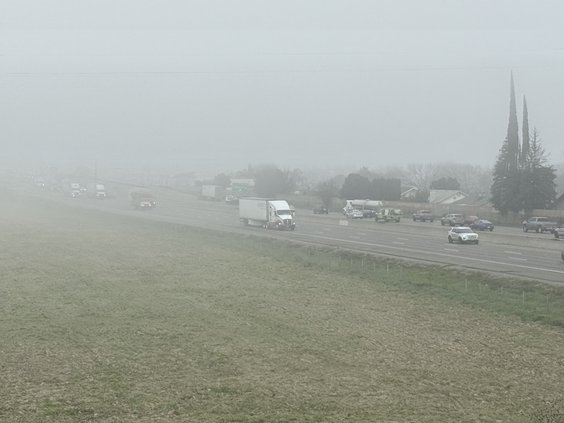
Traveling around the area on Thursday and Friday was risky business as the tule fog returned with a vengeance in the Valley and, according to the National Weather Service, will stick around through the weekend and into next week.
Visibility was less than 0.13 of a mile Wednesday night into Thursday morning, then on Thursday night and into Friday morning and the fog didn’t lift almost 1 p.m. on Friday before coming back when the sun went down.
Widespread and dense fog is forecast in the area early today, then returning tonight and into Sunday. Patchy fog is forecast from Sunday through Thursday, with high temperatures hovering around 60 degrees.
The National Weather Service has a Fog Severity Index, which ranges from Level 1 (No Transportation Risks) to Level 5 (Very High Risk for Transportation). Night time and early mornings in the Turlock area have been hovering between Level 4 (High Risk for Transportation) and Level 5.
The California Highway Patrol offers the following fog driving tips:
· Drive with lights on low beam. It is illegal to drive with parking lights on.
· Watch for CHP pace vehicles to guide you through fog.
· Avoid crossing traffic lanes.
· Do not stop on highways except in emergencies.
· Move away from a stalled or disabled vehicle.
· Consider postponing a trip until fog clears.
The Central Valley is fertile ground for the formation of tule fog, a persistent radiation fog, in late autumn and winter. It occurs when air near the surface, laden with moisture from evaporation, cools and the water saturates the air. If winds are calm, water droplets accumulate into fog clouds near the ground.
This isn’t the first time tule fog has been a problem this winter season. Fog stretching some 400 miles across the Valley appeared day after day for more than two weeks in late November and early December.
Central California has seen long stretches of cold, socked-in days in the past. In 1985, for example, Fresno experienced 16 consecutive days of dense fog, and Sacramento endured 17, according to news reports. Researchers have found, however, that tule fog has been forming less often in California in recent decades. Foggy days are beneficial for the valley’s fruit and nut trees, which need sufficient rest between growing seasons to be most productive. The fog typically comes with chilly weather that brings on a dormant period; it also shields trees from direct sunlight that would otherwise warm the plant buds.
— An article published on science.nasa.gov contributed to this report.