California’s snowpack has fallen sharply after an unusually dry January, creating new uncertainty for area farmers who rely on Sierra runoff to irrigate thousands of acres of cropland.
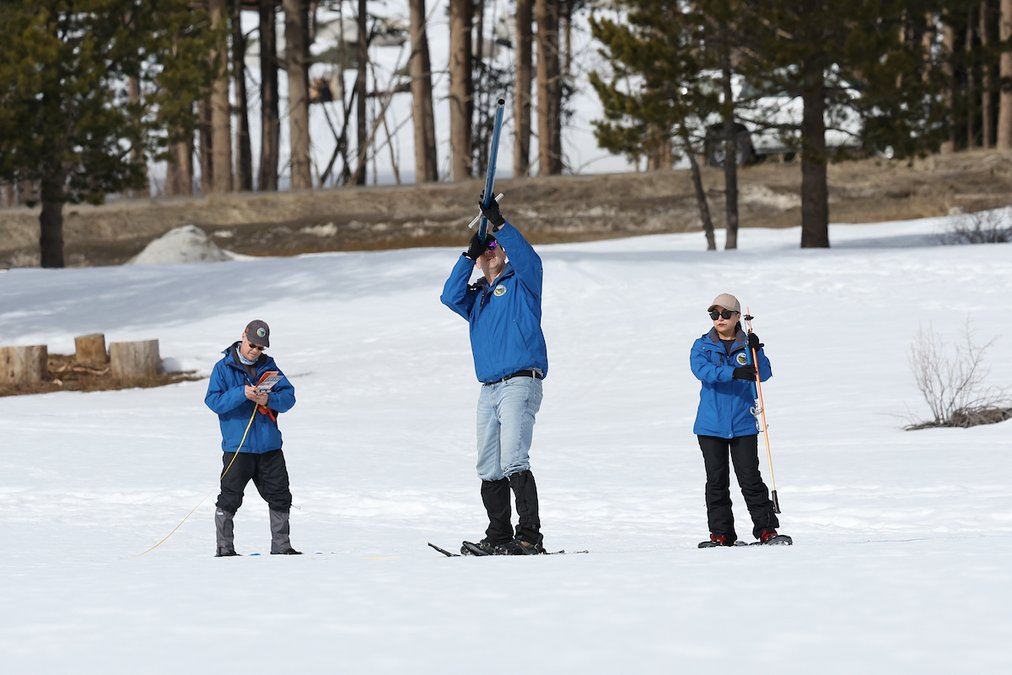
The Department of Water Resources reported Friday that its second manual survey at Phillips Station measured 23 inches of snow depth and a snow water equivalent of 8 inches — just 46 percent of average for the site. Statewide, electronic sensors show the snowpack at 59 percent of average for early February.
Three weeks ago, the statewide snowpack sat at 89 percent of average following a burst of atmospheric river storms. But January — historically California’s wettest month — delivered little precipitation, and forecasts show no major storms in the next two weeks.
“After the storms at the start of the year gave way to warm, dry conditions, those early gains we saw have flatlined or slightly eroded,” said Andy Reising, manager of DWR’s Snow Surveys and Water Supply Forecasting Unit. “While there is still time for February and March to deliver additional snow, the farther into the season we get with below-average conditions, the harder it will be to catch up.”
The Sierra snowpack supplies about 30 percent of California’s annual water needs and feeds the Stanislaus, Tuolumne, Merced and San Joaquin rivers — the primary water sources for local agriculture. Even in years when reservoirs remain healthy, growers depend on steady snowmelt to sustain irrigation deliveries through the summer.
That’s why the latest readings matter locally. Reduced runoff can translate into tighter allocations from the State Water Project and regional irrigation districts, forcing farmers to fallow fields, shift plantings or increase groundwater pumping.
Statewide reservoirs remain strong — currently 126 percent of average — thanks to three consecutive wet years and aggressive storage efforts. But water managers caution that reservoir levels alone cannot replace the role of snowpack in determining seasonal water availability.
DWR’s 130 electronic monitoring stations show a snow water equivalent of 9.7 inches, down from 67 percent of average at this time last year. January, February and March typically produce the bulk of the Sierra’s snow, leaving a narrowing window for recovery.
Water agencies are expected to wait several weeks before setting irrigation allotments, but many are already preparing for the possibility of reduced deliveries.
DWR will conduct its next snow survey at Phillips Station on March 2. Until then, local growers will be watching the forecast closely — hoping for storms strong enough to rebuild the state’s natural “frozen reservoir” before planting season ramps up.