MERCED – If your business is computers, you go to Silicon Valley. If you want to see the latest in ag innovation, production and better ways to grow food, you come to the Valley.
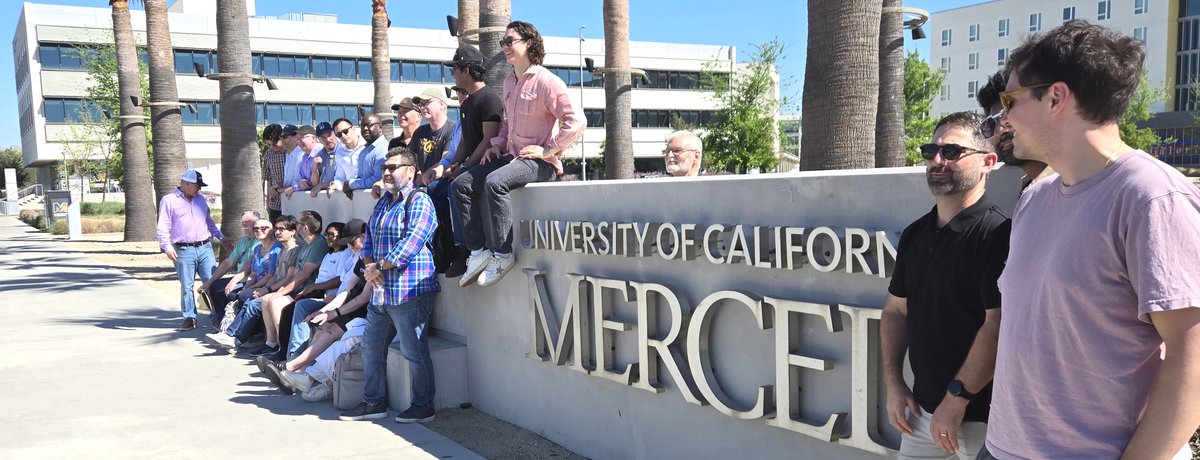
The World AgriTech Summit and the state’s GO Biz business-development department brought 17 people from some of the world’s top agricultural companies to Merced for two days. The visitors were among 1,500 entrepreneurs, inventors and investors who had gathered in San Francisco for a week to talk about ag in California. Each paid from $800 to $4,000 to attend an annual conference that moves around the globe each year.
But why fly to SF then hop on a bus to ride 125 miles to Merced?
“This is the powerhouse of the world in agriculture,” said Paulino Valdes, the young engineer who created a company called Gravity Gardens near Amsterdam. “This is the place you must be. The possibility for investing is way bigger here. They just think bigger here.”
UC Merced professor Josh Viers put it like this: “What sets this region apart is that we are on a mission to make a difference. If we can’t figure it out here, it’s not clear to me that we’ll be able to figure it out anywhere.”
California is America’s most important ag state, generating $60 billion-plus for farmers – a third more than any other state. When combined with food science, processing, packaging, transport, etc., that climbs to $220 billion and employs nearly 200,000 people – mostly in the Valley.
Along with some of the most innovative farms, the region has a host of institutions like UC Merced, Modesto Junior College and Merced College developing better farming and better farmers. They’ve been joined by business accelerators like BEAM Circular and the Reservoir, both of whom helped welcome the AgriTech visitors.
“Coming here, you made a really great decision,” Reservoir CEO Danny Bernstein told attendees over dinner Thursday. “The people you’re meeting here, these are the people who can get you there.”
Karen Warner, founder of ag-business accelerator BEAM Circular, joined a panel discussion Friday. “You’re hearing how excited this region is to work with you,” she said. “It’s real. California is the fifth-largest producer of ag in the world. That’s not the fifth-largest state, but in the world. … We’d love to help you find your way into this ecosystem.”
The visitors came from as far away as Ghana and as near as Canada.
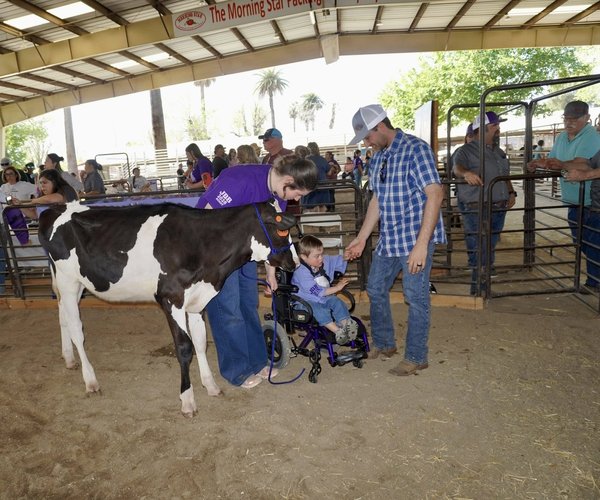
They started with a visit to Diamond J Dairy, a family-run custom-farming operation in western Merced then the AgTEC Center at Merced College. Friday, they visited UC Merced and its Experimental Smart Farm then Planta Bioscience, a Delhi company making biochar soil additives to reduce methane emissions.
That was Mike Williamson’s sweet spot. He’s the CFO of British Columbia-based Cascadia Seaweed, which produces soil additives that also reduce emissions.
“We all know the importance of this event to agriculture,” said Williamson. “But we’re all blown away” with the dedication, innovation and reception in Merced. “GO Biz rolled out the red carpet for everyone.”
The Merced field trip was not on the original AgriTech agenda, but when GO Biz offered the excursion, every slot immediately filled. So, GO Biz got a bigger bus … and filled it just as quickly. Several found cars and joined the excursion on their own.
Mohan Sivam recently moved to the United States from India to work with Neuralzome Cybernetics, which puts artificial intelligence-directed robots into fields.
“The reason we’re here is to bring in resources to solve problems,” said Sivam. “I’ve been to ag conferences all over the world – Germany, France, Spain, India. And I didn’t see what I see here.”
That included a tiny protest. About a dozen people gathered outside the conference center Friday, holding signs decrying loss of jobs to automation and criticizing “Big Ag.” The group posed for pictures then dispersed before the first break.
There are others sides to that issue. In light of federal immigration raids, farmers across America fear not having enough workers. They also worry about being undercut by growers in other countries where labor is less expensive, making it cheaper to fly food into the US than to grow it here. One speaker noted that a generation ago, California had 40,000 acres of labor-intensive asparagus. Now it has less than 1,000.
If the most repetitive and demanding ag jobs can be automated, American produce becomes more competitive, he said.
“Agriculture problems are all the same the world over,” said Nathan Bernhardt, CFO of Calgary-based NuLeaf Farms. “Water and personnel scarcity is part of farming on planet Earth. What helps with that? Automation.”
That’s why he came to Merced.
“Having the agriculture equivalent of Silicon Valley here is pretty compelling,” said Bernhardt. “The more brains you bring together, the more people you get into the room in one place, the better for everyone.”
Does he plan to return?
“Absolutely. We’re coming back. … If I hold my own, we will have a helluva facility.”
Valdes was equally enthusiastic: “This is where we would like to plan a factory.”
Such dreams are the point, said Erick Serrato, Merced County’s director of workforce development. “Our aim is that one of these companies creates a relationship – sees something important – so they’re looking to set up shop here in Merced.”
Mike Dunbar is the editor of Valley Solutions, a free daily digital aggregation of news from across the Valley.