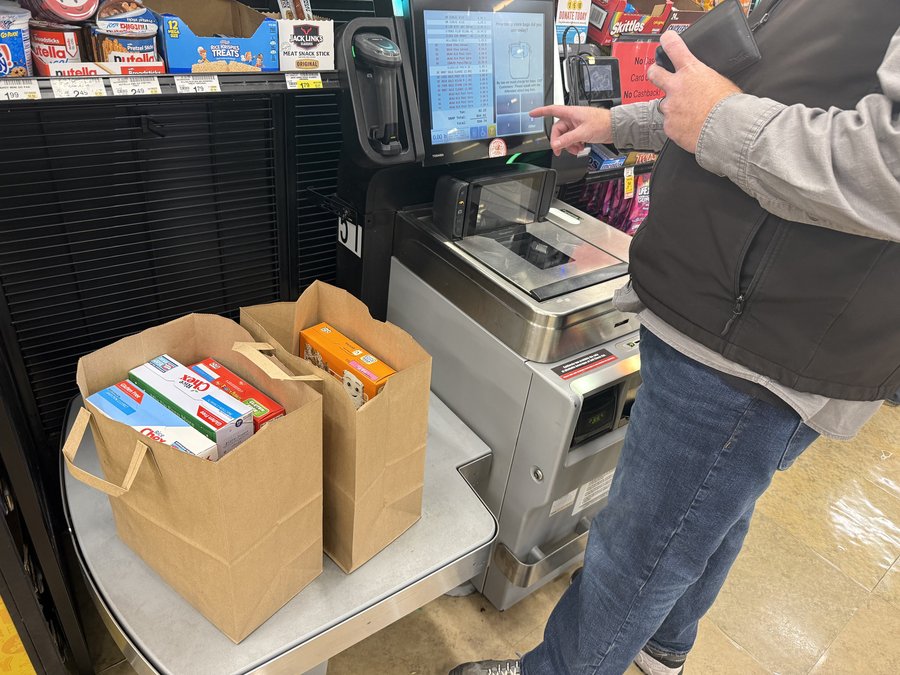
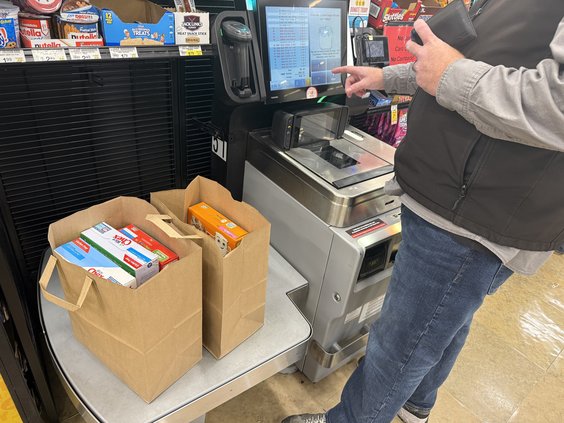
“Paper or plastic?” is no longer a question you’ll be asked at the grocery store beginning on Thursday.
With 2026 just days away, the new year will bring new laws enacted by the state of California. And one that is expected to have a large impact is the 100 percent ban on plastic bags.
Only recycled paper bags will be available at the checkout counter, and that will come at a price of at least 10 cents per bag. And, starting in 2028, those paper bags must be made of at least 50 percent recycled material.
Pre-checkout bags (the kind you get in the produce section for your broccoli) must be made of paper or compostable material (that not-quite plastic bag that you fear is not sufficient to hold your broccoli).
The following bag types are excluded from the definition of “carryout bag:”
- A bag provided by a pharmacy to a customer purchasing prescription medication, as defined by the law.
- A non-handled bag used to protect a purchased item from damaging or contaminating other purchased items when placed in a recycled paper bag or compostable bag.
- A non-handled bag designed to be placed over garments (the kind you get at the dry cleaners).
In 2014, California became the first state in the country to ban plastic bag use. Since then, 11 other states have followed suit. However, a loophole in that law allowed stores to provided thicker plastic bags — for a price. That actually resulted in an increase in the amount of plastic bags in landfills, according to CalRecycle, the state’s recycling agency.
Two years ago, Gov. Gavin Newsom signed Assembly Bill 1053 into law that eliminates the plastic option from the point of sale.
“We are literally choking our planet with plastic waste,” said Catherine Blakespear (D-Encinatas), the bill’s primary sponsor. The California Public Interest Research Group said Sunday that the new law finally meets the intent of the original bag ban.
“Plastic bags create pollution in our environment and break into microplastics that contaminate our drinking water and threaten our health,” Jenn Engstrom, director of the California Public Interest Research Group, told the Associated Press. “Californians voted to ban plastic grocery bags in our state almost a decade ago, but the law clearly needed a redo. With the Governor’s signature, California has finally banned plastic bags in grocery checkout lanes once and for all.”
As San Francisco’s mayor in 2007, Newsom signed the nation’s first plastic bag ban.
Other laws that will take effect this week include:
- Minimum wage— Under Senate Bill 3, the minimum wage will increase to $16.90 per hour.
- Stove and refrigerator requirement — Landlords will be required to provide working stoves and refrigerators in apartments.
- Low-cost insulin — SB 40 will require health insurers regulated by the state to cap insulin co-pays at $35 for a 30-day supply.
- Declawing ban — Assembly Bill 867 prohibits cat owners from having their cats declawed.
- Law-enforcement masks — Under SB 627 (currently being challenged in court), local and federal officers will be prohibited from wearing masks to conceal their identities.