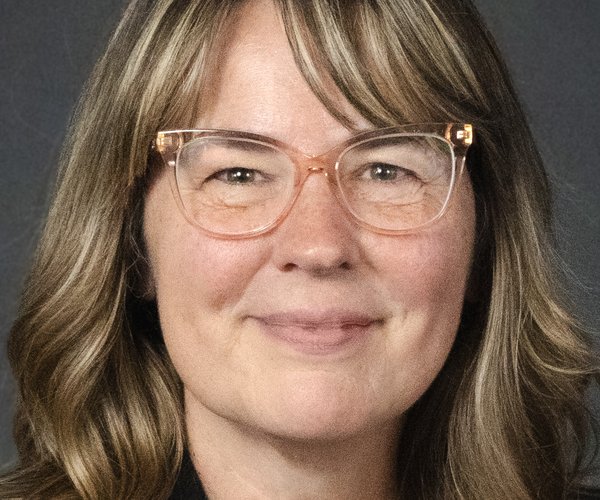

Legacy Health Endowment continued its goal of dramatically improving the quality of life within the community by bringing together resources, expertise and vision by hosting another Women’s Health Luncheon in Turlock. Dr. Riley Bove, a neurologist and clinician at the USF Weill Institute for Neurosciences, was the keynote speaker at an event held on Nov. 4. Bove is a national and international leader in sex and gender aspects of neurology, and the focus of her speech in Turlock was on menopause and how it affects the brain.
“Several years ago, we launched these luncheon conversations with a simple goal: to inspire, educate and empower the women and men who call our communities home,” said Jeffrey Lewis, CEO of Legacy Health Endowment.
“I've had the privilege of knowing Dr. Bove for now more than a decade through her groundbreaking ranking work on multiple sclerosis. Over the years, I've witnessed not only her extraordinary intellect and clinical expertise, but also her compassion and commitment to improving lives,” Lewis continued.
Bove shared with attendees some basic information about how menopause has been viewed and treated by doctors in the past and how the medical world is just now starting to take another look at things like hormone therapy.
“If you have a pregnancy, you go in and you have pregnancy regular checkups, and then a postpartum checkup. If you go in for surgery, you have scheduled post-op checkups. If you have menopause, the health system just has nothing. In fact, it outsources the care to other people because health systems haven't built from within to provide care for women in perimenopause,” said Bove. “And it's so wonderful to see health systems sort of trying to start building this care, making this available for women, because just like any other phase of life, we need to talk about prevention, being proactive, symptom management, etc.”
Bove said the she was in medical school when the landmark Women’s Health Initiative study was ended. The long-term national health study was launched in 1991 by the U.S. National Institutes of Health to investigate the major causes of death, disability, and quality-of-life issues in postmenopausal women—specifically heart disease, breast and colorectal cancer, and osteoporotic fractures. The study included testing postmenopausal hormone therapy. Its findings regarding hormone replacement therapy revealed unexpected links to increased risks of heart disease, stroke, and breast cancer, fundamentally transforming global menopause treatment and clinical practice. Many clinicians stopped prescribing hormones—including formulations that weren’t linked to the adverse outcomes observed in the study. Menopause education screeched to a halt in medical schools and residency programs.
“And essentially, what happened is in the whole field of women's health they absolutely stopped funding research, conversations, medical training and medical care for a generation of women… Only a few years ago did people start reanalyzing the Women's Health Initiative and saying, ‘Huh, when we gave it to women in their 50s, actually, they did really well,’” said Bove. “Finally, there's this enormous influx of research, enthusiasm, money into the field.
“It is really exciting to see all of this happened, and it's also happening because we have women physicians, we have women policymakers, deciders, funders, advocates, educators, patients who are empowered, and we also have amazing male allies, male visionaries, and together we're really working to try to bridge some of these gaps,” she continued.
Bove also answered questions from the audience. Some of the main topics included the “brain fog” that many perimenopausal women will report experiencing, along with exhaustion and “hot flashes.” Event moderator Jessica Chang Irish asked Bove, “What can we do proactively right now?”
“I think the first thing really is sleep. If you're not sleeping well, you don't have the daytime energy and the daytime ability to bring your best brain to the table. And so, for many women during perimenopause, of course, it's the hot flashes, and those need to be treated if they're bothersome, if they're waking you up. So that can be hormone therapy. It can also be all the other hot flash medications. There are brand new ones…that are just for hot flashes. They're not even hormonal therapies, and they just make the hot flashes go away. So, sleeping well is key, and then working on heart health, so blood pressure, diabetes risk, cholesterol, because we think that a lot of the way that menopause affects brain health is through the blood vessels. So, targeting that, and then exercise, bone health, muscle health are also key. All of those things are evidence proven to maintain brain health,” said Bove.
Following the event, it was announced that Bove will host telehealth conversations focused on the brain, menopause, and women's health. Each session will be limited to just six participants, creating a comfortable and interactive environment where participants can ask questions, share their experiences and engage in more personalized discussion. Sessions will occur every other month at no cost to participants. Those interested should contact Legacy Health Endowment at 209-250-2315.
The next Women’s Health Luncheon will be held Jan. 12, 2027 and feature Dr. Bridget Gannon, co-founder of Lavender, the online psychiatry and therapy platform, who will address mental health and menopause. For tickets, contact Legacy Health Endowment.