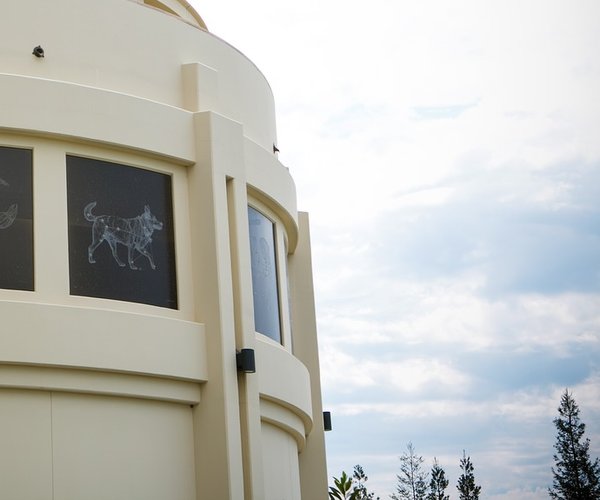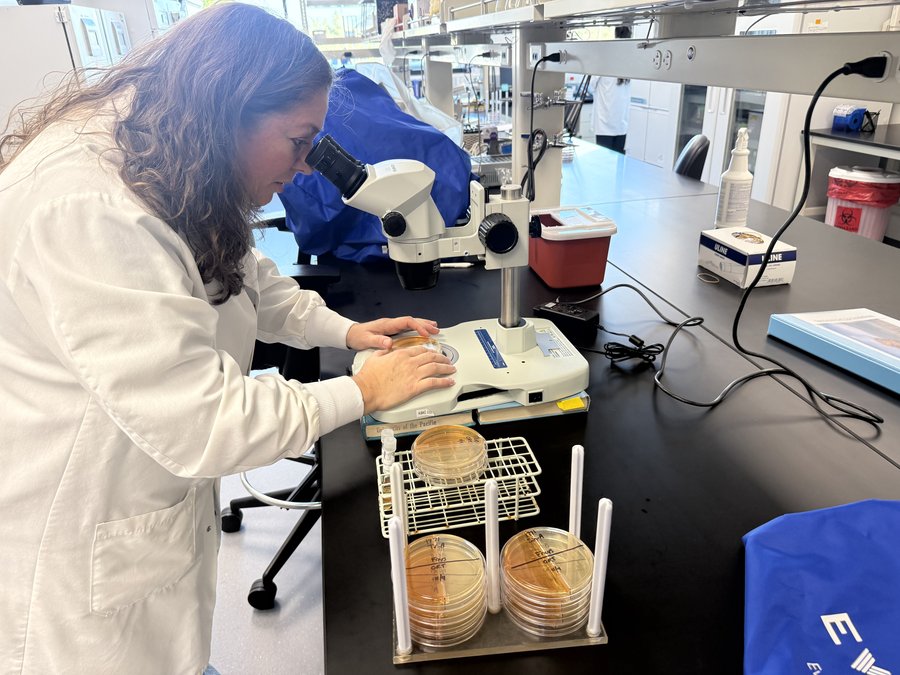
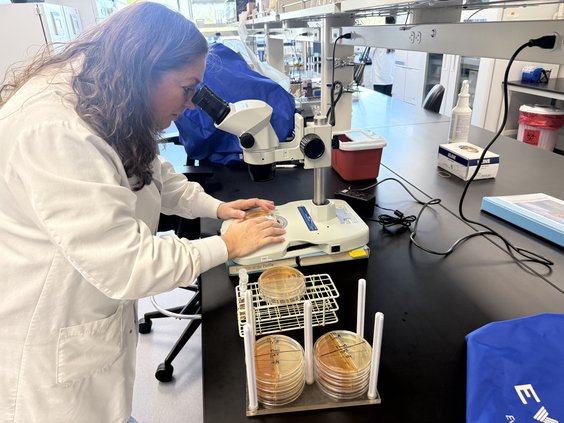
Turlock is now home to a state-of-the-art food safety laboratory with the opening of the new $108 million facility on Dianne Drive.
The state-funded California Animal Health and Food Safety Laboratory is devoted to protecting farm animals, the food supply and the public against new and emerging diseases. It replaces the smaller facility located next to the Stanislaus County Fairgrounds that focused only on poultry disease diagnostics. The new facility will allow the lab to perform animal necropsies and diagnostic testing on deceased cattle and other livestock, in addition to poultry.
The California Animal Health and Food Safety Laboratory Turlock branch is operated by the University of California, Davis, Weill School of Veterinary Medicine in partnership with the California Department of Food and Agriculture. It’s part of the California Animal Health and Food Safety Laboratory System, a network of four laboratories headquartered at UC Davis and operated by the veterinary school for the state.
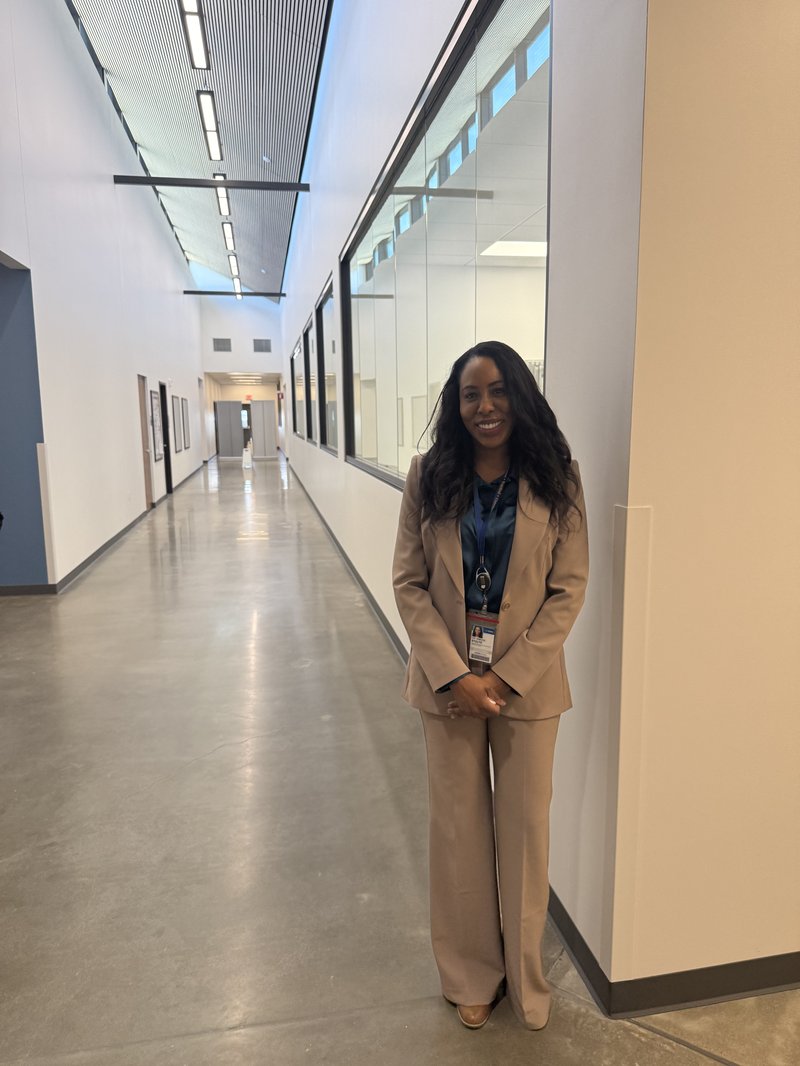
“[This] is a great representation of the collaboration between the university and California Department of Food and Ag. In this building, it is a partnership between those two groups to serve ag community here in Central Valley. Historically, we've really focused on the poultry community and making sure that that group of stakeholders have healthy animals, that food is safe, secure. But as time has grown, it's obvious that we needed to broaden that work to not only be poultry, to be including all animals. And so, this new facility not only represents the partnership with CDFA, but it also allows us to work on a much broader group of animals, including dairy cattle and things like that,” said Mark Stetter, Dean of UC Davis Weill School of Veterinary Medicine.
The work done at the Turlock lab helps make sure that animals that are going to the grocery stores around the world are safe to eat, according to Stetter. The lab performs routine testing on animals going in and out of the area, as well as helping local ranchers determine if an unexpected death is due to disease or something else.
Secretary of the California Department of Food and Agriculture Karen Ross visited the Turlock facility on Friday for its dedication ceremony.
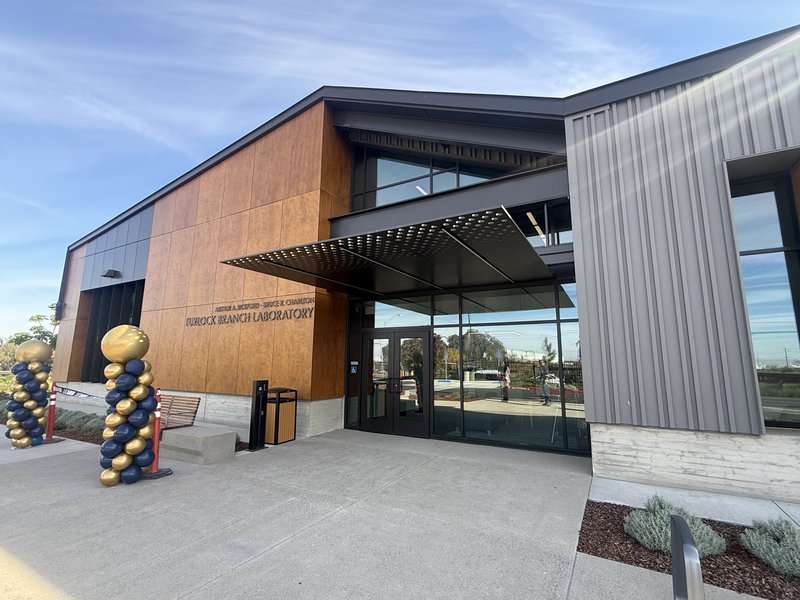
The building is named the Arthur A. Bickford-Bruce R. Charlton Turlock Branch Laboratory in honor of two leaders in poultry disease diagnostics. Both were veterinary pathologists who led the Turlock laboratory and received national recognition for their contributions to avian medicine. Bickford retired in 2001 and died in 2023. Charlton led the laboratory until his death in 2014.
“Having the labs that we have in the state have been absolutely fundamental to the success of being able to deploy the best science and diagnostic tools to be able to respond to outbreaks, as well as to help veterinarians and the ranchers and the farmers identify problems and how to fix it. I mean, it's really great to have these kinds of diagnostics in a community where the vast majority of our livestock population is,” said Ross.
When asked why Turlock was chosen as the location of the new facility, Ross credited local ranchers for their assistance.
“The industry itself was very instrumental in helping to identify affordable land, and there was a lot of cooperation to make that happen. And it came at a really good time because the fairgrounds were interested in having some of that property back for some of their future uses. So, the industry itself was a really important part of helping us identify affordable land at a really good location that's still central to serving the poultry community, but also the dairy sector around here and the ranching and the foothills. So having this lab and this continuum of the Central Valley is really important. Turlock, it's where it's happening,” Ross continued.
Many of the new facility’s staff members started out working at the old lab on N. Soderquist Road, which was built sometime in the 1950s.
Simone Stoute, branch chief of the new facility, has been working at the Turlock lab since 2014. She also did her UC Davis residency at the Turlock poultry lab from 2007 to 2009. Stoute is probably one of the people most excited about all the new, state-of-the-art equipment and expanded testing capabilities.
“This facility is better because not only is it nine times larger than having a 5,000 square foot lab that included a 1950s trailer, it's like a modern building and it is designed very thoughtfully. I love the fact that we designed the building from the beginning to be able to control disease movement…it's really nice to now be in a space where we can do modern testing and keep up with like state-of-the-art technology,” she said.
Between UC Davis and CDFA, the Turlock facility currently employs 50 people. Stoute said that it is not hard to find potential employees with the knowledge and skills needed to work in the Turlock lab.
“In Turlock we have Stan State and we have UC Merced and we have colleges around the area. We haven't had problems with recruiting. Also, we employ part-time student employees from the local colleges,” said Stoute.
She went on to say that they recruit pathologists from around the world to work at the Turlock lab.
“I'm just grateful that in California we invested in diagnostics because now that we see the threat of emerging diseases like bird flu, I think that it's imperative that we have facilities that can handle those emerging threats,” said Stoute.