BY KRISTINA HACKER AND JOE CORTEZ
Turlock Journal
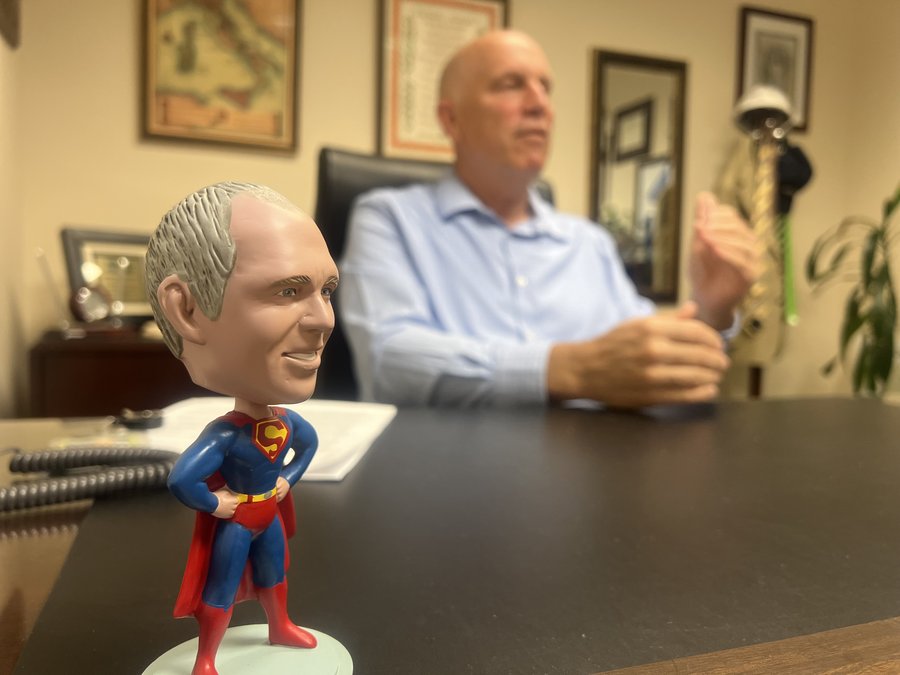
The Turlock Journal recently sat down with Stanislaus County District 2 Supervisor and Board Chairman Vito Chiesa. He talked about his upcoming State of the County address — set for July 14 at 9 a.m. in the Board Chambers, 1010 10th St. — along with updates on the county’s ARPA spending, the state’s rail plan, the county’s mental health plan and more. This is Part 1 of that discussion. Check out the Journal’s Wednesday issue for Part 2 of the interview.
Turlock Journal: The State of the County address is coming up in a couple of weeks, are you excited about that?
Vito Chiesa: I'm always excited to talk to the public about what's going on in the county. It's never fun being the chairman, because you're really looking backward when you were just a board member, not the chairman here delivering a message. But there's a lot of good things going on. There are a lot of challenges going on in this county, as you're well aware, and so it's a good time for us to inform the public.
TJ: It is, indeed. Let’s start with an update on the county’s ARPA (American Rescue Plan Act) funding.
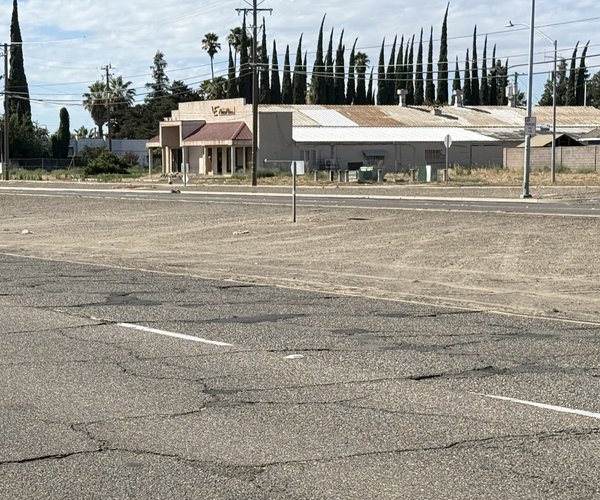
Chiesa: “So, we had what I consider a once-in-a-lifetime amount of money – $107 million – come to the county, really through COVID, and so we took an introspective look. If you remember, we put some money toward a Brookings Institute study. We were a partial funder of that, and some of Stanislaus 2030 came out of that. I can talk about that in a bit, but we've got more than 40 legacy islands inside the county. You're probably familiar, being from Turlock, with the Kenwood Island, which is Mitchell and Kenwood roads just north of Canal. They're county islands that don't receive any services from the city; they're typically on septic (tanks), and they have wells. … We had determined that we were going to try and fix some of the county islands and get the cities to incorporate them, which would bring much better services to the residents there.
It's very difficult for the sheriff's department to drive from outside, say, Hickman, all the way into the middle of Turlock to respond when Turlock could respond quicker. So, Kenwood Island is one of them. Topeka-Kansas is in District 1, which is in the Riverbank area. Similar, they're working on Colorado-Rouse, which is over by Modern Woodmen Field (formerly John Thurman Field); Riverdale Track, which is in Terry Withrow’s district, District 3, the west side of Carpenter; and then Parklawn and a couple of other smaller areas. But the majority of the county islands, the biggest ones, are in West Modesto. So, we split up the ARPA funds; we took $50 million and set it aside out of the $107 million and we divvied it proportionately to fix all of the county islands and bring them up to a city standard. It was about three-quarters of a billion dollars, so we're still a long way away. We did add $15 million of discretionary spending to the actual $50 million, plus Sen. Marie Alvarado Gill gave us $5 million in essentially an earmark request, so we can actually attack some of these issues. They're all under construction in some form, or they've been bid out and we're about ready to start construction. Kenwood's one of the last in my district on which they've opened the bids. It's come in about where we thought it was going to be, which is a good sign. And you should see it be under construction this fall. It's not enough, obviously, to do it all, but we're making a difference with what we consider the most impacted areas.
So, that's $50 million of (the ARPA funds); $30 million we put into economic development, and that's very broad, but that's where the Brookings Institute comes around. They identified that this is one of the best places in the United States, let alone the world, for a bio-circular economy. We have so much ag, I don't want to call it refuse, because that's not the right word …
TJ: Byproducts?
VC: (Nods) Byproducts. We're kind of the mecca for tomato processing here; we did have Del Monte until recently. But you have all of that and we just spread back out in the field and incorporate it back in the soil. We've got bio-mass coming out of orchard removals that we can't burn anymore. There are no co-generation plants where they burn it to create electricity. And so we started looking into that, and we thought, “here's a place we could target.” That's where Beam Circular was started. We had seed money of about $10 million that we put into that project, and it's amazing how they've turned the seed money into an expansion, because this is something that everyone can get on board with. If we can make it happen, you're upscaling what is now currently just material you put back in the field. There's nothing wrong with putting something back in the field, because you're still building up the soil; you have the ability to do carbon sequesterization naturally, maybe less fertilizer, better water-holding capacity. But is that the single greatest use? Can we upscale everything that we consider byproducts? There's some value in it now, but it's very little value. And then there's also the risk ratio that almond hulls are used for cattle feed. It’s a great protein source, and it's reasonably priced. If you were to find something that made it worth $1,000 that'd be better for the farmer, but it may not be better for the dairyman, and so you're trying to find things that have less value and try and upscale them, and walnut shells would be great. Right now, we're using walnut shell for dust control. It's great for that, but there's probably a better use for material like that. So, the partnerships that Beam Circular has created are truly amazing. …
We put some money in various other areas. One of them was child care, which is a part of our economic development. The Brookings study showed there’s a need of 12,000 daycare slots in this county.
TJ: Did you say 12,000?
VC: (Nods) So, we put some money toward that. If you want people to be able to go to work, child care is one of the huge impediments in front of them. We were lucky enough to get involved with a group out of Merced, which had a pretty good code that they had cracked on how to start these businesses; and they are businesses. They help them through the system, and then they are given a grant; and that's the seed money that we've given to secure their home to have kids there.
Also, part of the economic development portion of that went out to putting in a water system at Crows Landing, as we start to prepare that. There has to be some infrastructure if you're going to try and market it, and we need potable water. We're putting in a well next to the community of Crows Landing, which has lots of water issues in its community service district, so it will be cross contained and we can pump water that way. If necessary, we'll have potable water for the first phase, and that's been a long time coming. As long as I've been sitting on the board (since 2009), we've been trying to figure out exactly how to take care of that.
TJ: The Sacramento Bee recently quoted you as saying that you are “as disappointed as anyone” regarding the new delays facing the ACE rail expansion. What is the adjusted timeline for bringing commuter rail to Stanislaus County?
Chiesa: So, I'm a board member on the Amtrak of the San Joaquin. I'm not an ACE board member. People see me as an ACE board member because I'm so closely aligned; the same management manages both of them. What I’m on is the Stations Development Committee, which has two board members from the San Joaquin and two board members from ACE, and has been tasked with trying to figure out the state rail plan, how we fit in the state rail plan, and where we go first on a limited amount of money. When I said I'm as disappointed as anyone, I was a party to making some of those decisions to go north before we come from the south, and the subdivision line that we're going to use to get to Sacramento to go to the north, north of Stockton, is the lightly used Union Pacific Railroad line, so there's not a lot of impacts. It's along the I-5 corridor and you can build a station along I-5 and Lodi; you can build one in Elk Grove. It's easy, because it's cattle ground, and it's right outside of town. I hate to use simple words like that, but it's easier than when you're trying to build a downtown Modesto station. You've got the Kinder Morgan gas line underneath, you've got fiber-optic cable; it's impacted to build two of them because we have to go to a center-loaded platform and it creates lots of issues. Ceres is going to be right under the Whitmore overpass, and that's a very impacted area with not a lot of space. Turlock would probably be the easiest of the three stops expected in Stanislaus County, but that's the next phase; we have to get to Ceres first. So, when you look at all things – where can we build and get service running quicker? – the preponderance of the evidence leads you to going north. There's also more ridership going north.
There's about $250 million that came through (former state Sen.) Anthony Cannella's bill, originally of the $400 million that can only be spent between Lathrop and Ceres. So, nothing is stopping, but there's not enough money to complete it. But going north, starting to build stations, and running some service – because the line is less impacted than down here in the Modesto area – is the way we went.
We have to do what I've seen happen in Highway 132, in the North County Corridor. In 1960, they started buying right away, and it wasn't until we passed Measure L in 2016 that gave us the match money to apply. Once we were successful on the first phase, the second phase is fully funded already. So, 1962 to 2024 … and it was opened 2026. We're going to start construction on the next phase, North County Corridor, which was a dream when I got on the board.
TJ: So, when I ask you, when can we see light rail commuter trains in Turlock, what would your answer be …?
Chiesa: You can currently drive over to Denair, and you can get on a train right now. You can get to Stockton, and you can get on ACE and head down to get to the Bay Area, San Joaquin ends up in Oakland; San Joaquin Amtrak goes from Kern County to Oakland, and then two trains go up to Sacramento. Currently, ACE runs five trains a day, I think, from Stockton to San Jose. You may have to take a quick Uber from the Amtrak station to go to San Jose, and you’ve got to go over to the Stockton Cabral station, but that's two miles, and you can actually get on a train. What we're trying to do is make it more convenient, where people can do cross-platform. If I ever show you the state rail plan, Stanislaus County is the big winner if high speed rail ever makes it to Madera; Merced would be better, but Madera for sure. The reason Merced is more important is that you have ACE train on this line (gestures with left hand) and Amtrak over here (gestures with right hand). Amtrak is currently running six trains, so that's not hourly service, that's every two hours. Then, you start running ACE trains every other hour and you have hourly service to get to anywhere. You go right, you go left, you go right, you go left – you'll get there. And there's going to be an Natomas stop on ACE and Amtrak, because both of them are going to use the same downtown Sacramento stop, and that one's practically already done. There's not much that has to be done. It's going to be essentially a whistle stop, and then a stop in Natomas into the line, and you're going to make it to the Sacramento airport, so there's lots of really, really good things. Money is the key. Cost of construction after COVID has exploded the cost of all projects, not just the rail projects. And so, we had to prioritize.
Long-winded answer, I know.