BY XIMENA LOEZA
CV Journalism Collaborative
The long-term use of a toxic and popular agricultural herbicide in California is coming to an end – and Stanislaus County almond growers will feel the impact locally.
As of August 10, California state pesticide regulators will begin the phase-out process of paraquat-dichloride after every manufacturer doing business with the state said they have given up making pesticides that include the chemical, officially withdrawing their registrations.
Advocates in the Central Valley are frustrated it’s taken this long to get here.
“It really points to the failure of a pesticide regulatory framework that does not take swift action when the science and when people have been bringing up concerns over the years,” said Angela Garcia, co-director for Californians for Pesticide Reform.
For years, Syngenta, one of the largest manufacturers of paraquat, has been accused in thousands of ongoing lawsuits of hiding the risk of Parkinson’s disease from farmworkers who have handled it. DPR claims their studies show no association between paraquat exposure and Parkinson’s disease.
The end of paraquat in California comes after a state bill, by former Assembly Member Laura Friedman (D-Burbank), sought to sunset paraquat outright in 2026. The final version of the bill, passed in September 2024, instead gave DPR until January 2029 to conduct a reevaluation of the pesticide to determine whether to cancel, suspend or impose more regulations on it.
In December 2024, DPR released preliminary scientific reports that identified a potential association between paraquat exposure and thyroid impacts and birth defects along with risks to birds and other wildlife.
Then this past March, Syngenta announced it would stop making paraquat.
DPR said its last registrant reportedly stopped making paraquat products on August 6, effectively ending the state agency’s reevaluation that it started in November 2024.
Garcia said that while all of this is a step in the right direction, he is still concerned manufacturing companies won’t be compelled to provide the health and safety data that was required under the state Assembly bill.
“What could that data have revealed to the public,” Garcia said. “People want to know what they’re potentially being exposed to. What’s potentially being drifted on to their homes, their schools, their safe environments?”
Impact on Stanislaus County agriculture
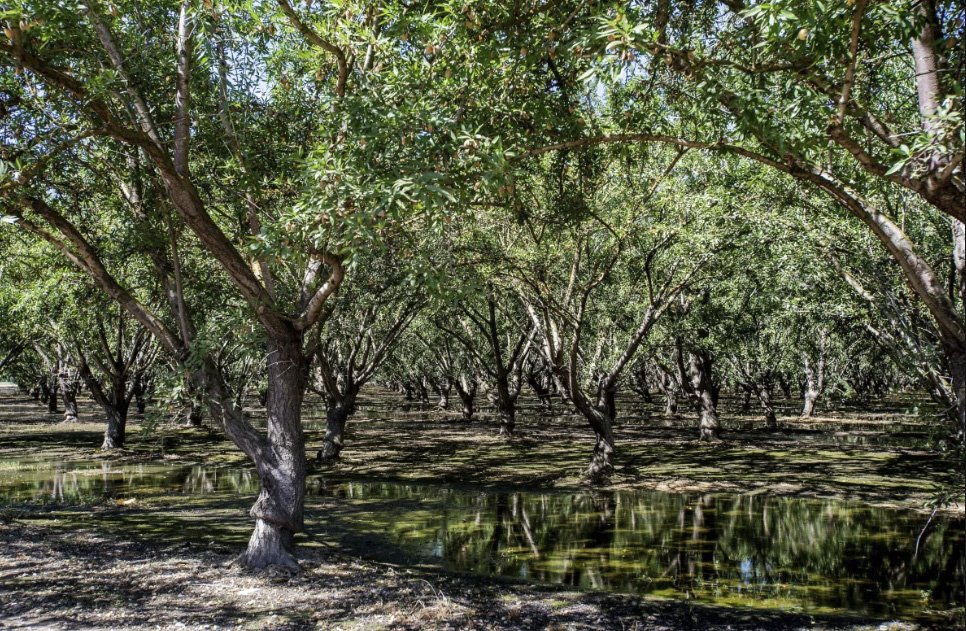
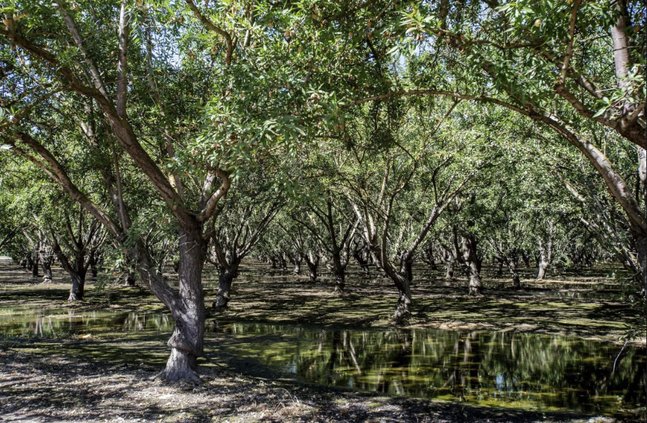
For Stanislaus County, the end of paraquat usage could have a big impact where almonds are the county’s top agricultural product. Those farms have used paraquat to keep weeds at bay, and have the highest use of the pesticide across the San Joaquin Valley.
According to state pesticide regulation data, there were 378 applications of paraquat dichloride across various almond farms in Stanislaus County in 2023, the most recent data the state has published online. Kern County had 302 applications for almond farms in 2023, Merced County had 214, Butte County had 198, and Fresno County had 130 applications.
“Paraquat has been an important weed-management tool for many of our growers, and there’s no question that losing it will create challenges for some farming operations,” said Linda Pinfold, the Stanislaus County Agricultural Commissioner. “When we lose tools like this, it becomes even more important that the California Department of Pesticide Regulation is able to efficiently review and register new products that give growers effective alternatives.”
While manufacturers have voluntarily withdrawn paraquat from California, licensed dealers can still sell existing stock for up to two years, so paraquat won’t vanish overnight; however, its long-term use on California farms is over.
Laura Plascencia is a program manager with Valley Improvement Projects (VIP), an environmental justice group based in the Central Valley. She said she’s seen the toll of chronic pesticide exposure firsthand: her uncle sprayed pesticides on farms in Stanislaus County for over 30 years without protective equipment, and suffered the consequences.
“He died from pancreatic cancer at 64, and the farm owner who told him not to worry about protective measures died from the same disease about ten years before him,” she said.
Plascencia echoes Garcia’s concerns about transparency and pesticide regulations.
“That raised concerns in the community — why aren’t these chemical companies willing to be transparent about the chemicals inside these pesticides,” she said.
Plascencia said people want to know what’s being sprayed and how those chemicals affect the health and environment of farmworkers, their families, and the residents who live in the surrounding area.
“Here in the Central Valley, our topography — with high mountain ranges on both sides — really limits natural airflow,” Plascencia said. “A lot of the contamination and toxic exposure created in the Central Valley stays in the Central Valley, so everyone who lives here ends up getting impacted.”
This story was written and produced by the Climate Solutions Studio, a project of the Central Valley Journalism Collaborative and its partner newsrooms.