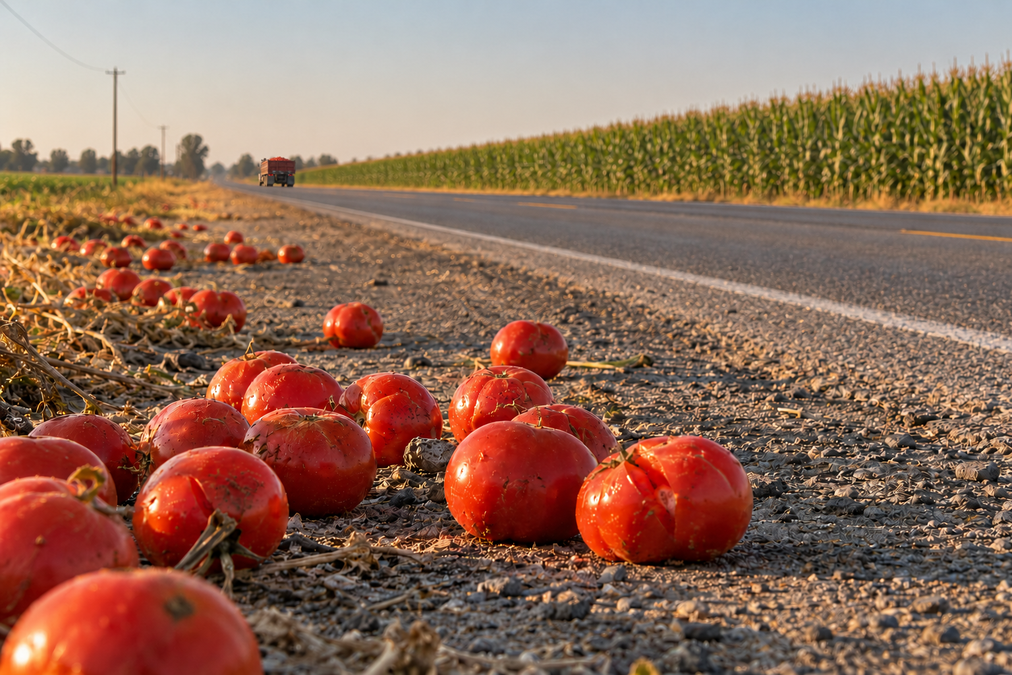
If you've traveled along the Valley’s highways and rural roads in recent weeks, you've probably seen one of the area's most recognizable signs of harvest season: tomatoes scattered along the pavement.
As another tomato harvest comes to a close, the steady stream of trucks hauling bright red loads through the Central Valley has once again become part of daily life. While most deliveries make it from field to processor without incident, some tomatoes inevitably escape along the way, leaving behind a reminder of one of the region's most important agricultural industries.
For communities such as Turlock, Newman, Patterson and Los Banos, tomato trucks are a common sight throughout the summer and fall. The vehicles transport thousands of pounds of freshly harvested tomatoes from local fields to processing facilities, where the crop is turned into products including tomato paste, sauces and ketchup.
California remains the nation's leading producer of processing tomatoes, accounting for about 90% of the country's supply. As a result, highways such as Interstate 5, Highway 33 and many local agricultural roads see a constant flow of trucks carrying tens of thousands of pounds of tomatoes in open trailers during harvest season.
Most loads arrive without problems. However, tomatoes occasionally bounce from trailers or spill onto roadways, creating scenes that range from mildly amusing to traffic-disrupting.
This year's harvest included several notable incidents. On July 16, thousands of tomatoes spilled across Highway 165 near Bradbury Road in Merced County, prompting a response from the California Highway Patrol and Caltrans crews. Motorists were advised to slow down and expect delays while workers cleared the roadway.
Another incident occurred Sept. 6 on Henry Miller Road near Badger Flat Road, where a collision involving two trucks hauling tomatoes left fruit scattered across the roadway and required road closures while crews worked the scene.
While roadside tomatoes might draw smiles from passing motorists, spilled produce can create legitimate safety concerns. Crushed tomatoes and their juice can leave pavement slick, and large spills can obstruct traffic lanes and require extensive cleanup efforts.
Officials encourage motorists traveling near agricultural trucks to maintain a safe following distance, stay alert for fallen debris and slow down when approaching cleanup operations.
Beyond the occasional mess, the tomato harvest represents months of work by farmers, truck drivers and agricultural laborers throughout the Central Valley. The crop supports farms, processing facilities and transportation businesses that play a significant role in the region's economy, coming in as the No. 10 crop for Stanislaus County in the 2025 agricultural report valued at $46 million.