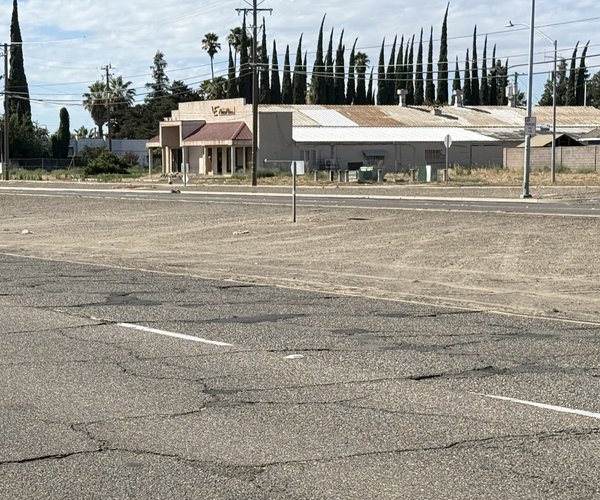

The Turlock City Council voted Tuesday to uphold a planning commission decision prohibiting a food truck park from being developed on a parcel of land at the southwest corner of Fulkerth Road and Countryside Drive.
Mayor Amy Bublak and councilmembers Rebecka Monez (District 2) and Erika Phillips (District 4) backed the planning commission’s decision, while Kevin Bixel (District 1) and Cassandra Abram (District 3) voted to move ahead with the revised project plan.
“We’re going to take our time to evaluate options at this point,” said Brett Jolley, a Stockton-based land use attorney who represents Turlock’s Paul Family, which owns the 1.31-acre parcel. “No decision has been made at this point.”
Revisions to the project reduced the number of proposed food trucks from 14 to 12 and increased the number of parking stalls from 31 to 36 – all in an effort to mitigate increased traffic flow. Nevertheless, the project has been opposed at every turn by residents who claim added traffic and noise will create an undue hardship for the neighborhood and decrease property values.
According to Development Services Director Adrienne Werner, the city’s municipal code establishes standards for mobile food trucks, but that is typically one truck per property. Because this type of project is not specifically prohibited or permitted by the municipal code, a conditional-use permit is necessary. And that requires the recommendation of the planning commission and approval of the council.
“I can’t see how this is much different than any other land-use that is consistent with the general plan,” said Abram. “So, even though the traffic is bad and even though there will be some noise, I don’t think it’s much different than what staff could approve there with the type of zone it is.”
Bixel was curious as to what kind of business neighbors would welcome there.
“I think a two- or three-story hotel wouldn’t go over so well there,” said Bixel. “And if you wanted to put a medical facility there, you’d have a lot more traffic there than you would from food trucks.”
Neither a hotel or a medical facility would require approve of the planning commission or the council.
Jolley said that the council’s decision not only hamstrings the Paul family and project applicant Pushpinder Kahlan, but it also harms 12 potential food-truck operators, who are, in essence, small-business owners.
“This is a small business at two levels,” Jolley told the council. “It’s a small business for Mr. Kahlan and his wife, who are the developers of the site and will be putting significant capital into developing that site. And it creates small-business opportunities, as well, for those 12 entrepreneurs who want to get into the food-service business and maybe don’t have the money to get a McDonald’s franchise or to open their own brick-and-mortar restaurant. But they can get their start by opening a food truck like this.”
Bublak, Monez, and Phillips saw it differently, and said concerns about traffic outweighed potential benefits.
“Unfortunately, the council has made a decision that makes it even harder for this property to develop in the future,” Jolley said. “It’s zoned commercial, but they’ve determined they don’t want to approve this use. And they’re not offering alternatives as to what would be a way to develop that property in a commercial zone.”