For many today, life has become an exercise in hedging against the future. We hedge against inflation with gold, against uncertainty with data, and against loneliness with the digital hum of constant connection. Yet the most reliable, appreciating asset we possess is not financial at all but human: love. If we treat love as infrastructure rather than sentiment, we begin to see how it undergirds resilience, meaning, and the very possibility of a shared future.
Love is not merely a private feeling; it is social capital.
Across history, it has been the invisible glue that turned isolated individuals into durable communities. We loved our families because they ensured the tribe’s endurance; we loved our neighbors because mutual aid kept the harvest from failing. Those practical roots matter now more than ever: in an age of atomized labor, precarious housing, and algorithmic isolation, love is the mechanism that transforms survival into a story worth living.
We live in a paradox. Technology promises connection and delivers fragmentation. Social feeds provide constant stimuli and leave us feeling lonelier. In that context, choosing to love deeply becomes a radical act of resistance.
Love resists optimization. It refuses to be reduced to metrics, engagement scores, or efficient transactions. Love is inherently inefficient. It requires sacrifice, vulnerability, and a willingness to accept risk without a guaranteed return. That inefficiency is its moral power: it binds people in ways no algorithm can replicate.
If artificial intelligence can mimic style, compose music, and anticipate preferences, the human capacity for slow, sacrificial attachment will be our distinguishing asset. Quiet companionship, the patience of long friendship, the labor of caregiving—these are the last miles no code can travel.
In a future where many forms of work are automated, the labor of love will remain essential: it sustains households, stabilizes communities, and preserves memory.
To treat love as infrastructure is to change policy and practice. It means recognizing unpaid caregiving as economic labor and supporting it with wages, respite, and social protections. It means designing cities and housing that reduce isolation for the elderly and the single. It means building workplaces that allow people to care for one another without sacrificing financial security. It means investing in public spaces and institutions that make sustained relationships possible rather than optional.
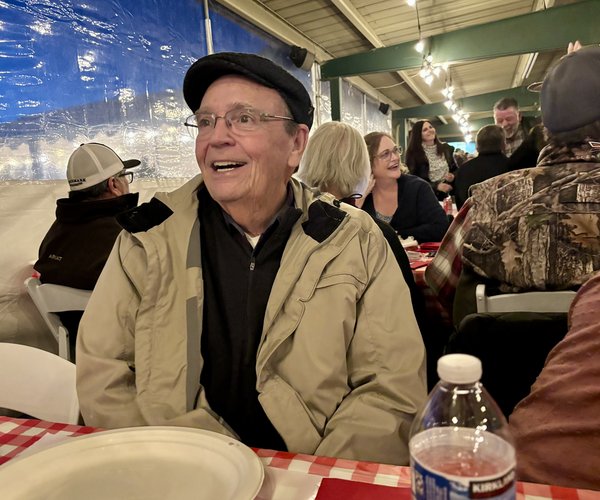
But policy alone is not enough. We must also reclaim cultural narratives that equate worth with productivity and youth. Aging, attachment, and interdependence should not be framed as liabilities. They are evidence of lives lived in relation to others. When we honor those ties—when we celebrate the neighbor who shows up, the parent who sacrifices, the friend who stays late— we reinforce the social norms that make love durable.
Love also has a moral economy. It asks us to value presence over performance, fidelity over novelty, and repair over replacement.
It teaches us that some losses are not failures but transformations: people can be chapters rather than the whole book, and grief can coexist with gratitude. Love’s paradox is that it both exposes us to pain and enlarges our capacity to bear it.
That paradox is not a bug; it is the feature that makes human life meaningful. Practically, we can cultivate love at scale by changing incentives and architecture. Paid family leave, universal caregiving credits, community eldercare hubs, and affordable housing near transit all make it easier to sustain relationships. Public campaigns that destigmatize asking for help, that normalize long friendships and chosen families, and that portray older adults as repositories of wisdom will shift culture. Employers can redesign schedules and benefits to reward relational labor. Cities can prioritize parks, libraries, and community centers as sites where attachments form.
There is also a spiritual dimension: love asks us to be present. In a world that trains us to optimize every minute, presence is a radical refusal. It is the small, repetitive acts—listening without planning a response, showing up when it is inconvenient, staying through the hard seasons—that compound into a life worth remembering.
To hedge against the future with love is not to deny risk or to romanticize suffering. It is to invest in the one asset that appreciates with time: shared memory, mutual trust, and the capacity to care. If we measure national wealth only by GDP, we miss the most important balance sheet.
A society rich in relationships is more resilient in crisis, more generous in prosperity, and more humane in decline.
For me, love is not a private indulgence but a public good. It is the labor that keeps neighborhoods alive, the patience that teaches children to be kind, the steadiness that lets communities recover from shock. If we are to build a future worth living in, we must stop treating love as optional and start treating it as essential.
Hedging against the future with money buys security; hedging with love buys meaning. The two are not mutually exclusive.
A just society would protect both. If we invest in the structures that allow love to flourish—economic supports, public spaces, cultural narratives—we will not only survive the uncertainties ahead; we will thrive in ways that spreadsheets cannot capture.
— Jeffrey Lewis is the President and CEO of Legacy Health Endowment and the EMC Health Foundation. The words expressed are his own.