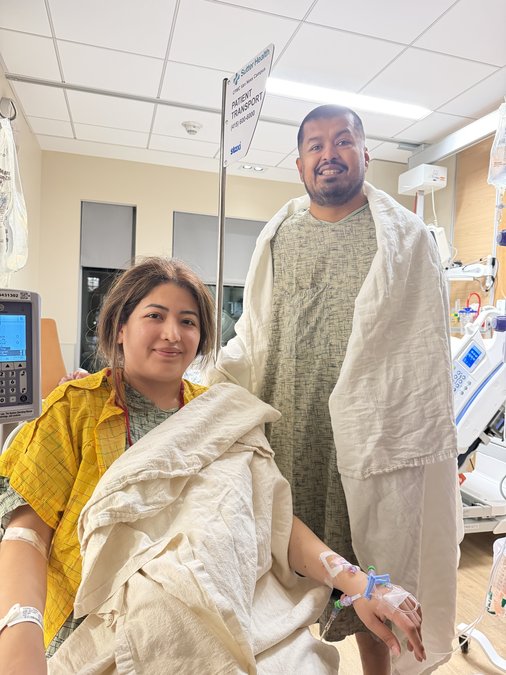
Turlock resident Alyson Chavez is 15 years younger than her brother, Juan Chavez of Patterson.
“He really helped raise me,” said Alyson, a nurse at Memorial Medical Center in Modesto. “He would take me on trips with him when I was little, and he was the one who would give me birthday parties.”
On Tuesday, it was Alyson’s turn to take care of her big brother.
Alyson donated a kidney to Juan, whose failing organs had required him to undergo nightly peritoneal dialysis treatments since last summer. His wife, Alejandra, is a nurse practitioner at Memorial.
The surgery took place at San Francisco’s California Pacific Medical Center with the assistance of robotic technology – a first-of-its-kind procedure in the city, according to Dr. Eric Miller, M.D., a kidney- and pancreas-transplant specialist.
“CPMC did its first kidney transplant in 1969,” said Miller. “So, they’ve been performed here for decades, since before I was alive.”
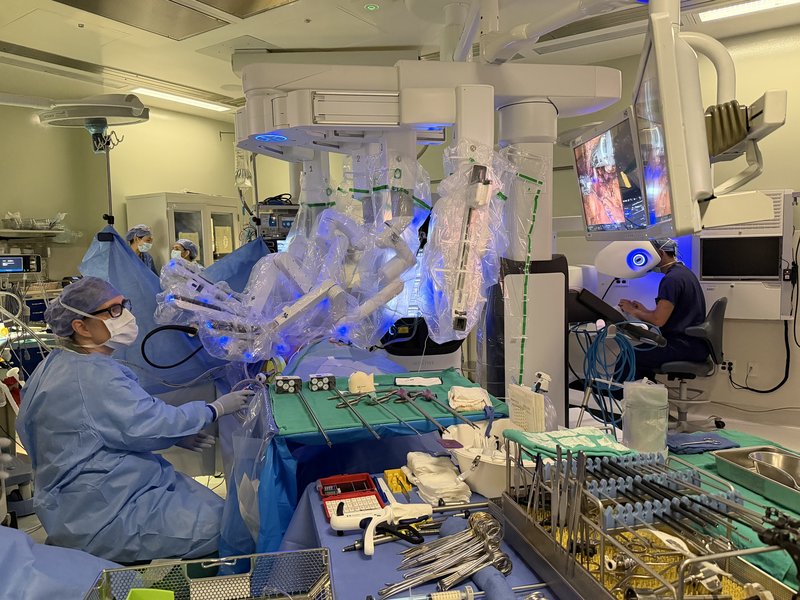
For the most part, Miller said, the technology hasn’t changed all that much. But the robotics offer surgeons a better tool to deal with the intricacies of transplant surgery.
“The robot’s movements are so fine and precise that it can literally peel a grape,” Miller said. “Really. I’ve done it.”
Miller explained that when surgeons are working deep within a patient’s pelvis or abdomen, it can be difficult to find room for their hands and to maneuver their fingers. That’s where the robot comes in. But it’s not as though the surgeon presses a button, then sits back while the robot does all the work.
“The robot is not doing anything on its own,” said Miller. “It’s an extension of my surgery. It’s like the coolest video game ever. But if I put the controller down … it’s not going to do anything.”
The added benefits are less pain, less blood loss, less tissue injury, and shortened hospital stays. Plus, it’s better for surgeons, resulting in less neck and back pain, which means less fatigue and better concentration.
“That translates to more effective outcomes,” said Miller. “It’s the wave of the future for a lot of different operations.”
Both Alyson and Juan were up and walking within hours after the surgery. Alyson, a self-described “baby when it comes to pain,” was on standard pain medication, while Juan merely popped a few Tylenols.
“I really don’t feel that much pain,” said Juan, a construction worker who remodels houses. “My sister feels pretty good, too.”
Alyson was released from the hospital on Wednesday, getting plenty of help from her partner, Erik Ayon, who is also a nurse at Memorial. “We’ve got a lot of nurses here,” Alyson joked. Juan was released on Friday.
The reason for the degeneration of Juan’s kidneys isn’t fully known. According to Miller, the best guess is that it’s akin to a birth defect, and his kidneys have never been functioned fully. He began having problems in 2008 and went on dialysis last September. When the search for a donor began, his sister immediately stepped up. When another sister – Grezia Chavez – offered her kidney, Alyson wouldn’t hear of it.
“She’s very stubborn,” said Juan. “If she says she’s going to do something, she’s going to do it.”
Alyson hopes others will answer the call to donate.
“I hope this article helps spread the word for kidney donation,” said Alyson. “People can live normal lives with just one kidney, and with this surgery, it’s an easier recovery.
“I was lucky to be a match, but I know there are people who might not have someone to donate. It’s crazy how many people are in need. With more education, maybe others will consider becoming donors.”
Juan is just happy to have siblings willing to come to his rescue.
“I couldn’t believe it at the beginning,” said Juan. “She’s my little sister, and even if she had backed out, I wouldn’t have minded. This is a big thing to go through. It’s incredible. I can’t believe that I have sisters like that.”
Miller said that because Juan received a kidney from a living donor, he can expect about 20 years of freedom from dialysis, as opposed to 10 years if he’d received an organ from a deceased donor.
“I’m telling you, every time I do a surgery, I’m excited about it,” said Miller. “As a surgeon, it’s so exciting to bring advanced technology to our patients. When I first rounded on him, he was up and had taken a walk, without taking any of the strong pain meds – just Tylenol. That’s so exciting. As a surgeon, it’s what you live for.”