BY DIANA J. INGRAM
Contributing Writer
It is night. My family and our dog, Tess, are huddled together in my car. We see groups of neighbors carrying flashlights, looking out for vandals. We are still very uneasy, waiting for the next event.
Our car radio is our connection with the outside world. Then, across our radio came a beep, beep, beep, and then the emergency warning followed by “This is not a test.” Reality surrounded us.
It was Oct. 17, 1989, a day that literally shakes me up whenever I think of it. It is one of those moments that gives no warning and that never leaves you. At the time of the Loma Prieta earthquake, I lived in Watsonville—not far from the epicenter.
The day had started with an aura of excitement. The whole state of California was preparing for the third game of the World Series with the Oakland A’s battling the San Francisco Giants at Candlestick Park.
Televisions were on across the nation. Tim McCarter was enthusiastically previewing the upcoming game. The fans were at a fever pitch.
I had just picked up my mother from her nearby apartment. My family was excited about the game. I had left my young granddaughter with my stepson. I was only going to be gone a few minutes.
When the clock hit 5:04 p.m., McCarter said, “I’ll tell you what, we’re having an earthquake.” Then the signal was lost.
My mother had just closed the passenger door and was settling in when suddenly there was a noise that sounded like a train was about to drive right through my car.
My car was suddenly lifted. My right arm was thrown against my car door, breaking my wrist. I used my left hand to reach out and grab my mother’s hand and told her I loved her. I thought that this might be “the” moment.
There was no time to be scared. Then wires fell from the poles onto the hood of my car. For a moment my breath stopped, then I looked behind me and slowly backed up, causing the wires to drop onto the street.
We could hear sirens going off, car alarms were chiming all over, and you could see smoke already. I carefully started to drive to my home, worried about my son and granddaughter. My mother was crying.
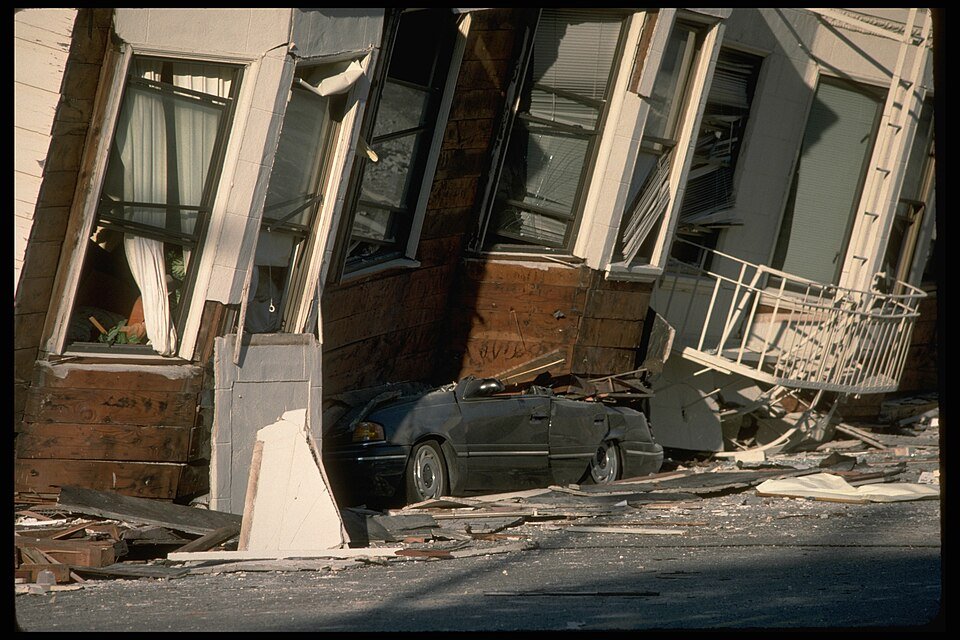
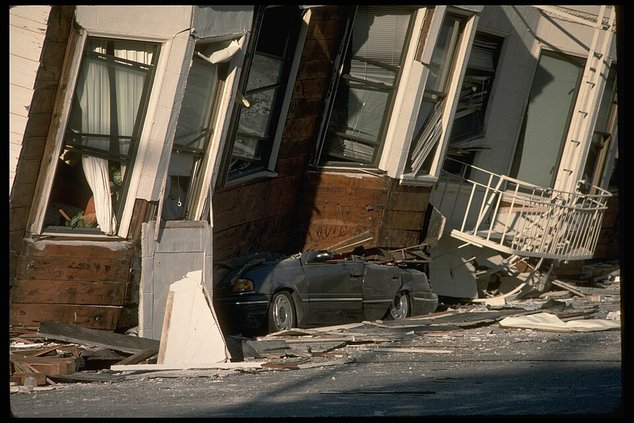
As I drove, on either side of the road I could see fallen chimneys, people out in front of their homes shaking their heads in disbelief. Some fires had started, then there was the sound of explosions, one after another in a row.
My home was across the main street, Freedom, where there was a mobile home park. Turning on my street, Stanford, I could see the flames bursting through the mobile park in a horrible chain reaction.
Across from my home on my street, my neighbor’s swimming pool was creating giant tidal waves that kept rising and falling. It was a memorable sight.
On one side, I watched homes explode and flames and smoke fill the air, and on the other side, I saw precious water putting on a frightening show.
My family was standing in front of our home, looking as shaken up as my mother and I felt. Our dog stood guard, her message clearly saying, “Don’t worry. I got this.” I was told that my cats must be hiding somewhere. I didn’t blame them.
I peeked inside to see my home that was in shambles. My television was in a different room. I could not imagine the route it had taken. Our refrigerator had been forced out the kitchen door onto our backyard porch.
My bookcases’ contents were scattered about, and broken glass was everywhere I looked. The power was out all over town. Next to our home, there was a small family market. One of the numerous aftershocks brought down one of its brick walls.
My daughter moved our cars onto the far side of the market’s parking lot. It seemed like the safest place. We rushed into the house to grab a pillow, a few blankets and then all climbed into our car. Of course, our dog, Tess, was part of our crowded car. There were no cell phones. We felt very cut off from the rest of the world. We would turn on our car radio sparingly. This was the first time we could get word of how far the damage had spread. Our adventure had just begun.
We slowly heard on the radio the path of destruction the 6.9 earthquake had caused. The entrances to Watsonville were cut off due to landslides and newly created craters in the roads.
There were 63 deaths as a result of the earthquake. There were 3,750 reported injuries. Damage was reported throughout Santa Cruz County, the San Francisco Bay Area, as well as the East Bay.
In San Francisco, many homes were destroyed in the Marina District due to significant liquefaction. Near the shore of Monterey Bay, there was a mild tsunami.
The World Series was postponed. It is thought that many lives were saved that day because of how the game affected traffic on the main roads. The aftershocks kept coming, lingering for months.
Perhaps the most well-known tragedy of that memorable day was the collapse of the double deck of Cypress Street Viaduct on Interstate 880 in West Oakland. Listeners to their radios like us were horrified to learn that 42 people were crushed to death in their cars.
A major entrance to the coast, Highway 17, was closed for two months, creating a traffic nightmare.
I volunteered at our local food bank where an astounding 2 million pounds of food was distributed in a period of 18 months. These are just some facts. When you are living through a disaster, you are too involved in the now to deal with those kinds of numbers.
Many of the homes at the time in Watsonville were older, like ours. We thought that was part of the charm of the area. Inspectors finally arrived and red-tagged home after home for demolition.
People were worried about where they would live. Many residents were too afraid to sleep in their own home as we were assaulted by aftershock after aftershock.
In the large park near the center of town, a tent city was formed. Some people without tents slept on the grass.
At first, small markets that were still open began to increase their prices, even for water, which increased the hardship. All of a sudden, overnight, we had 25,000 people living outdoors, many in the park or their backyards.
Mobile homes continued to burn, and fireplace chimneys crumbled to the ground. I felt like I was living in a disaster movie.
Slowly, services, medical care, screening for assistance, food and water were brought in, creating a mad rush. Some politicians came to make a speech, had their picture taken, and then quickly left.
Helicopters flew low overhead, causing more destruction in their quest to get the best pictures. Many residents, including myself, would yell at them to get away. We did understand that this was a big story—but this was our life.
My beloved downtown Watsonville was never the same. Our beautiful steeple on Saint Patrick’s Catholic Church dramatically fell into Freedom Boulevard near my home.
Our home had been shaken off its old foundation, and we had to wait for inspectors to approve help. PG&E was off in most places. It was October, and it was definitely chilly.
Groups of vandals took advantage of the crisis to steal from unprotected homes. I was freaked out, to be honest. I missed our quiet town and the sense of normalcy. My nerves were on edge with the constant aftershocks that seemed to go on forever.
For us, this was a moment in time to remember. We were fortunate that it was, personally, not worse.
So, what did Diana do after things calmed down and her home was repaired? Did I relax and go back to our old way of living? You can decide. We moved to Los Banos in 1990.