The century long story of St. John Assyrian Presbyterian Church began simply enough – with Assyrian Christians needing a place to worship.
Attracted to the San Joaquin Valley’s Mediterranean climate, which was similar to that of their Middle Eastern homeland, Assyrians began settling in Turlock in the early 1900s. And a small group of Assyrian Christians in Turlock began meeting for church services in the home of Rev. David Joseph on the corner of North Palm and Wolfe streets – rent was $11 a month – and the very first Assyrian church in Turlock was born.
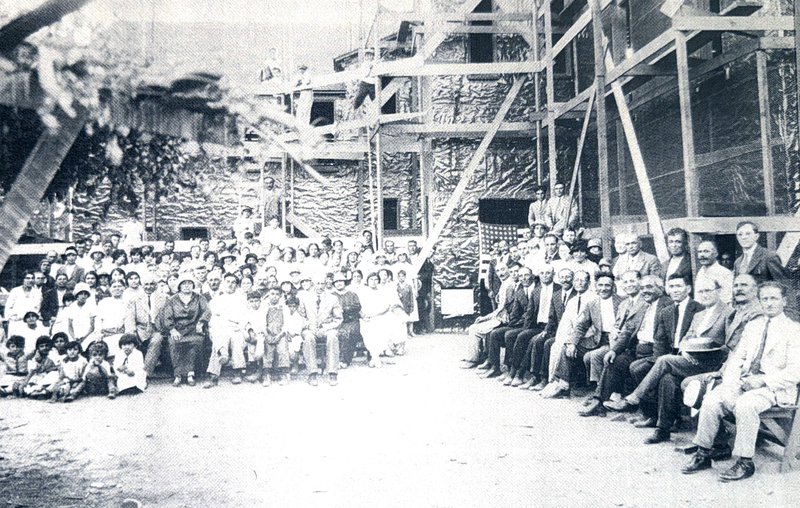
Eventually, they settled on a small plot of land located at 450 S. Palm St. on which to build a permanent church for the congregation. And though it wouldn’t be completed or dedicated until many months later, the building officially became a church on Jan. 13, 1926. The first pastor was Rev. Dr. Elisha David, who served in the role until 1956, when the church officially became known as St. John’s Assyrian Presbyterian Church.
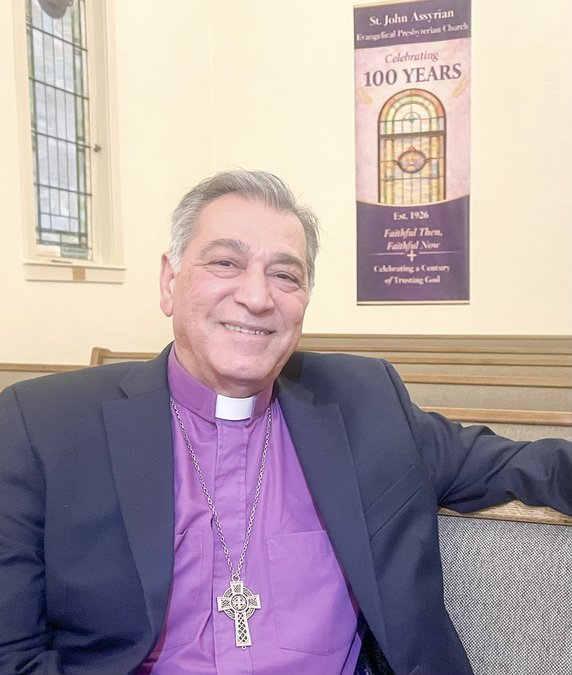
A century later, St. John’s – today led by Rev. Edward Eissabake – is still thriving as it prepares to celebrate its 100th anniversary on Saturday at the Assyrian American Civic Club, 2618 N. Golden State Blvd.
More than 500 guests are expected to attend the celebration, with local dignitaries – Mayor Amy Bublak, Stanislaus County Supervisor Vito Chiesa, Rep. Adam Gray (D-Merced), state Sen. Marie Alvarado-Gil (R-Jackson), Assemblyman Juan Alanis (R-Modesto) – expected to attend or send representatives.
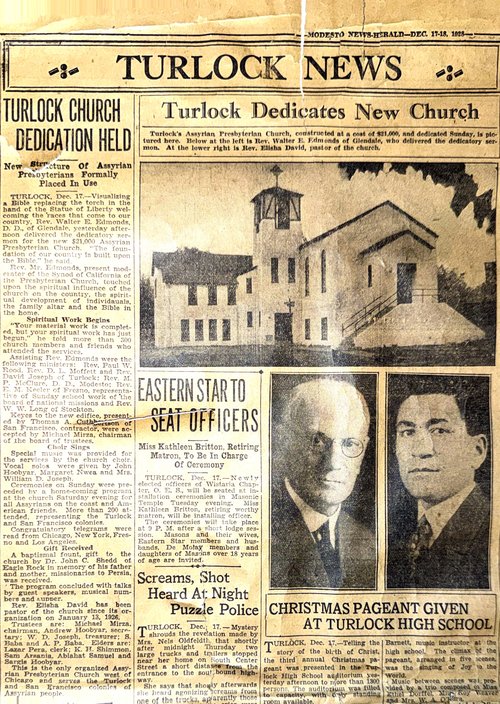
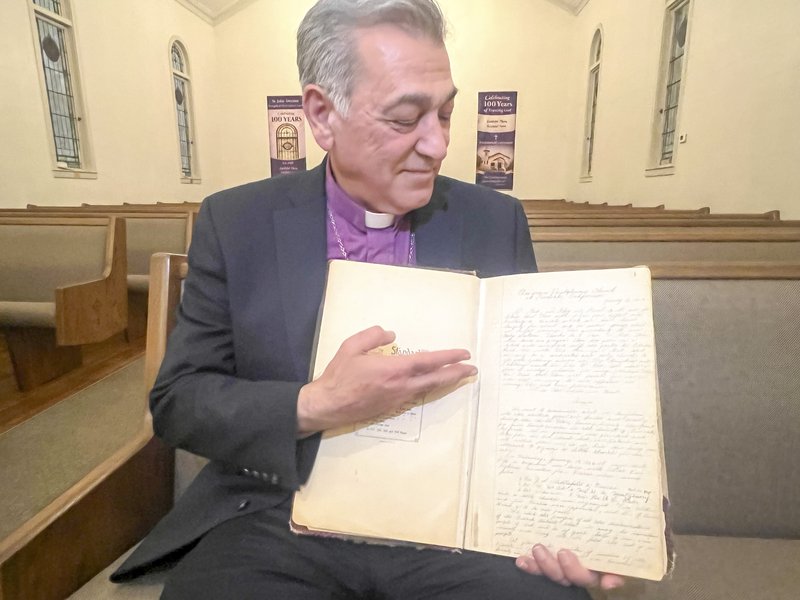
Eissabake has been digging through the church’s extensive archives, on a quest to paint the most accurate historical picture of the church and its beginnings.
“I think I’ve been reading for 100 years,” said Eissabake, who has been the full-time pastor at St. John’s since 2006, after three years of pulling double duty in Turlock and San Jose.
Eissabake said Saturday’s celebration will reflect on the church’s past, present and future, and will feature a presentation on the church’s role in Turlock over the past century.
“The evening will start with an exhibition, followed by a brief history of the church, including some pictures – slides if we can – from the old times,” said Eissabake, who pointed out that St. John’s is the oldest Assyrian church in the U.S., west of Chicago. “And then it will include my speech on what is next. And there will be a ceremonial passing of the torch from the older church members to the younger ones.”
A church prayer book, with the first entry dated Jan. 13, 1926, seeks continued growth for the church.
It seems that century-old prayer was answered.
Today, St. John’s has about 265 parishioners, and services average about 100 attendees each week. The church includes a six-pew chapel – that serves as a classroom during Vacation Bible School and as a crying room during services – and a dining room that seats about 100, with a fully operation kitchen nearby. Also on the premises is a house in which former pastors resided, and a playground that was built by Assyrian members of the Boy Scouts. The church even streams its services live on social media, across the country and beyond its borders.
“Assyrian refugees came from the Middle East to this country with minimal resources,” said Eissabake, a native of Hamadan, Iran. “And they started a church within a few years. And then in 1936, in the midst of the Great Depression, they built a house for the pastor. They were resilient people … just like their church.”