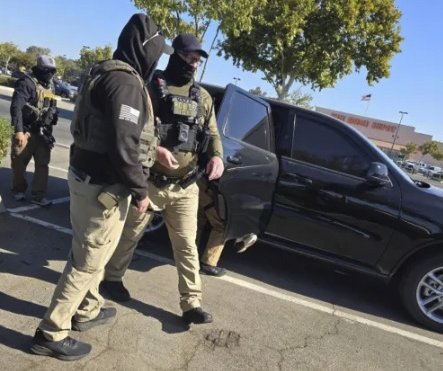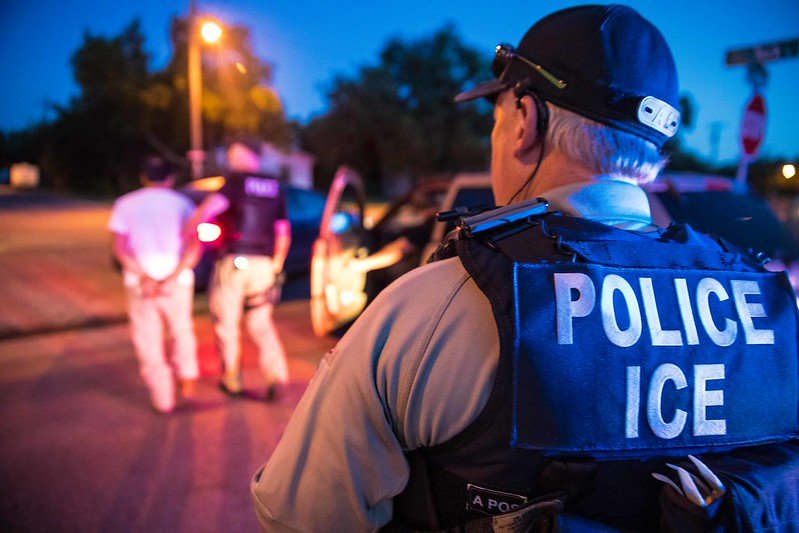
Stanislaus County Sheriff Jeff Dirkse reported to the Board of Supervisors on Tuesday that 39 individuals in the county jail were released to Immigration and Customs Enforcement during 2025, a slight uptick from previous years.
Dirkse’s presentation was part of the yearly TransparenIUCt Review of Unjust Transfers and Holds (TRUTH) Act.
“It’s probably not surprising,” said Dirkse. “In 2025 a new administration was sworn in with a new president and a different direction, and the numbers have gone up.”
In 2025 – the most recent year that statistics are available – there were 20,341 bookings at the Stanislaus County Public Safety Center, and ICE requested detainers placed on 324 of those individuals, about 1.6 percent. Of those 324 requests, 224 detainers (1.1 percent) were eventually placed. And of those 224, only 39 were actually released to ICE, less than a two-tenths of 1 percent of overall bookings.
Before sharing the 2025 report, Dirkse provided trendline data for the years 2018 through 2024 – a span that includes half of President Donald Trump’s first administration plus the first year of his second term, and all of President Joe Biden’s one term in the White House. During that time, the sheriff’s officed registered 120,888 total bookings, with ICE requesting 1,279 detainers (barely 1 percent). Of those requests, only 769 (60 percent) were realized. All told, 107 individuals (an average of 18 per year) were turned over to ICE from 2018-24. That represents less than one-tenth of 1 percent of all bookings – about half of the 2025 rate – that eventually were turned over to ICE.
Of the 39 individuals released to ICE in 2025, 31 of them (80 percent) were from Mexico. When examining the 2018-24 numbers, 561 of the 769 detainers placed (73 percent) involved persons from Mexico – the nearest foreign country to Stanislaus County.
Dirkse pointed out that Senate Bill 54, which became law in 2017 and is more commonly known as the California Values Act, prohibits state and local law enforcement agencies from using their time and resources to assist in federal immigration enforcement.
“In order for a detainer to be placed, someone ultimately has to have a felony conviction for one of the laws that are enumerated under SB 54,” said Dirkse. “There are two lists: serious crimes and violent crimes – 30 on one (list), 42 on the other, 72 total. If you aggregate them, it’s about 50 total crimes. Murder, rape, robbery, etc. So, they have to have a conviction for one of those 50 predicate crimes before we can place a detainer."
A “hold” can be placed on an individual accused of one of the listed crimes, but that person cannot be turned over until convicted in a court of law.
Dirkse said that he’s willing to meet with various community groups to discuss the numbers.
“In the seven years I’ve been sheriff, we have done this presentation around the community,” said Dirkse. “Many of the board members – either current or your predecessors – have hosted one in their district; we’re always willing to do that. Other members of the community have hosted them in the past. During COVID, we even did one on Facebook Live. We’re certainly not opposed to doing this presentation elsewhere and answering questions.