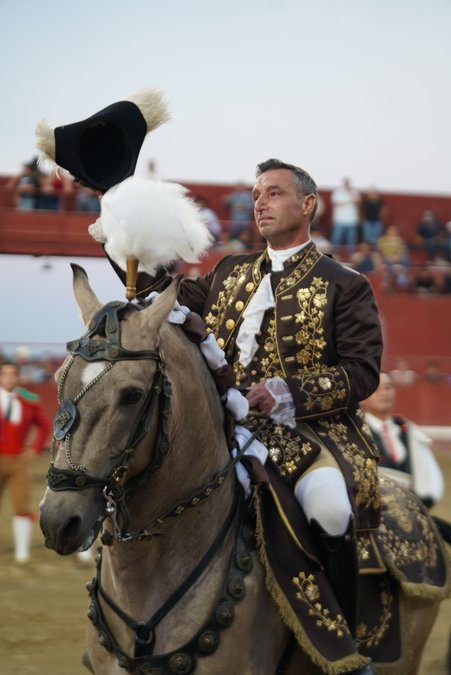
GUSTINE — When the wooden gates swung open at Bella Vista Park on the afternoon of Sept. 14, the air carried more than dust and brass band music. It carried the weight of a farewell. In the center of the arena sat Paulo Jorge Ferreira, dressed in the traditional casaca, preparing for what the California bullfighting world had already named his “Last Dance.” After more than two decades as the defining figure of Portuguese mounted bullfighting in the United States, Ferreira was stepping into the ring one final time. Sharing the arena floor with him were the Forcados Amadores de Turlock, marking their 50th anniversary — a milestone intertwined with Ferreira’s own legacy.
For 21 years, Ferreira has been the undisputed standard of Portuguese mounted bullfighting in America. Born in Azambuja, Portugal, he began riding at 16 and spent five years training daily under master bullfighter Manuel Jorge de Oliveira before turning professional on national television in 2002. He fought up to 35 bullfights a season across Spain before accepting an invitation to ride at the Our Lady of Fatima festival in Thornton in 2005. By 2009, he made the Central Valley his permanent home, joining forces with the Martins family and reshaping the sport in North America.
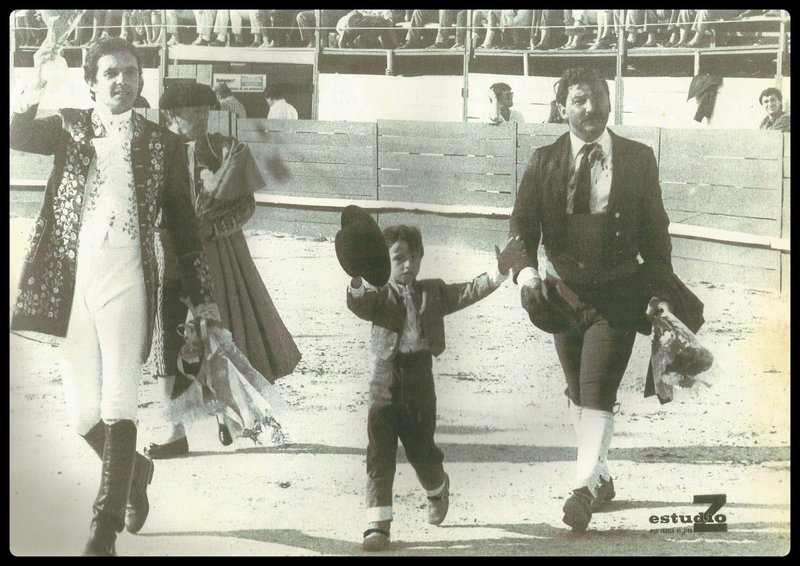
“Before him, guys would come over here, spend a month or two or three, and then go back to Portugal. It wasn’t their life,” said George Martins Jr., cabo of the Turlock forcados. “Paul came here and made this his life. He really invested in our bullfights here in California. Before, it was really an imitation of Portuguese bullfights. Now, it’s much closer to being level with the Portuguese bullfights.”
Ferreira’s rise was not inherited. He did not come from a bullfighting dynasty or a wealthy equestrian family. His parents ran a restaurant and café, but supported his passion.
“I didn’t come from a strong family. I was the only one in my family that liked to ride horses,” Ferreira said. “Luckily my parents were paying for the food, for the shoes. Otherwise I couldn’t do nothing.”
He eventually transformed an eight‑horse barn into a nationally recognized Lusitano breeding operation, earning top honors including Best Lusitano Breeder at the 2022 national championship in Texas. In the arena, he introduced a style that blended classical horsemanship with daring spectacle — famously reclining flat across the cantle of his saddle mid‑charge to tap the bull with his bare hand.
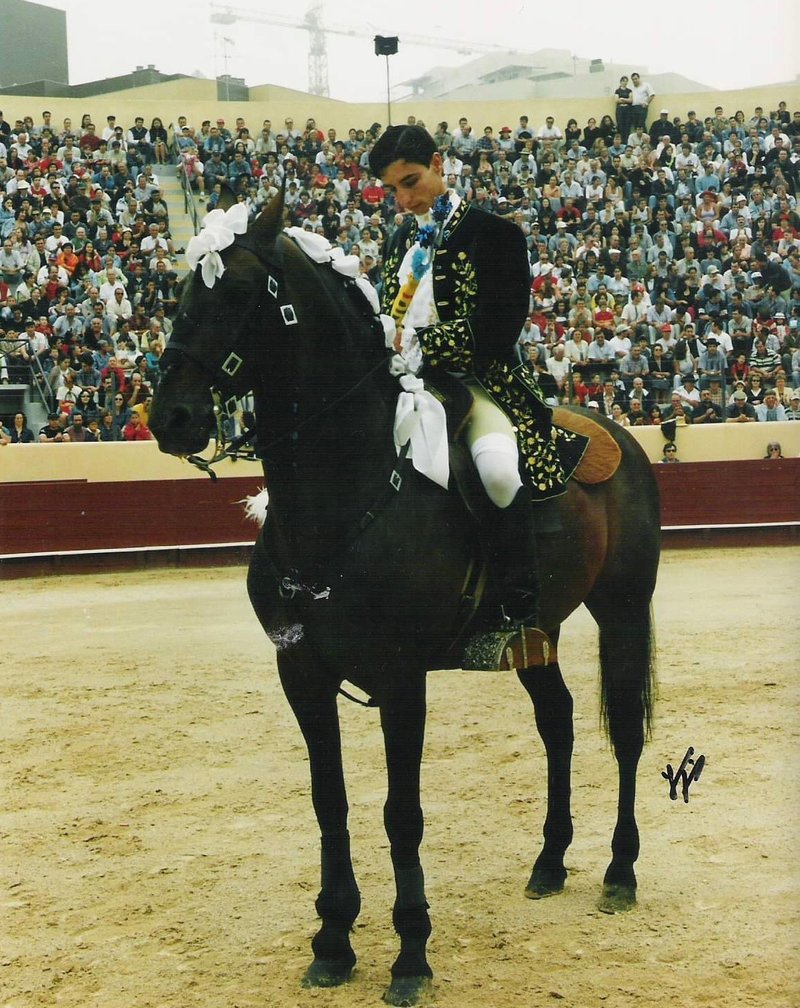
“I was already trying to do an update; to mix the classical with the spectacular,” he said.
But even the most daring horsemen feel time. At nearly 44, Ferreira decided 2026 would be his final season, choosing Gustine — the spiritual center of the Valley’s Portuguese community — as the place to say goodbye.
“I wanted to retire on my full capacity,” he said. “Even in my last bullfight in Gustine, I was thinking of doing that laying back, but the body doesn’t let me anymore. I’d rather go out on a good note.”
While Sept. 14 marked Ferreira’s farewell, it was also a golden jubilee for the Turlock forcados. Founded in 1976 by stock contractor Manuel Souza and Joe Martins, the Forcados Amadores de Turlock are the oldest active forcado group outside Portugal.
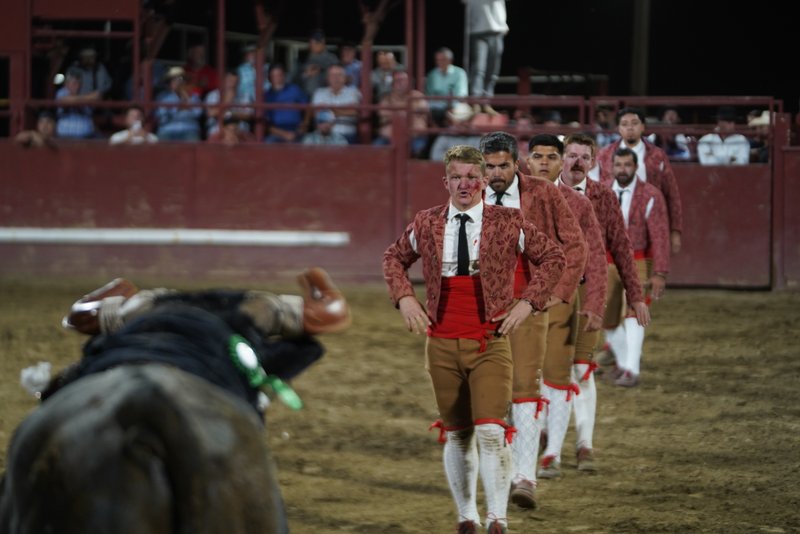
The forcados — known in California as the “Suicide Squad” — perform the sport’s most dangerous discipline: eight men, unarmed, confronting a charging bull. The forcado da cara provokes the bull alone, taking the impact to his chest before the team swarms in to secure the animal.
“It’s truly a brotherhood,” Martins said. “We’re literally putting our lives on the line every time we step into that arena. There have been forcados that have died grabbing bulls. We are truly brothers that would literally die for each other.”
Training California-born youth requires relentless discipline. Beginning each February, the squad runs weekly practices using mechanical dummy bulls, live practice cattle and hours of film study.
“The mental preparation — there is no training for that,” Martins said. “You’re either going to be able to, or you’re not.”
For their 50th anniversary season, the Turlock forcados contracted 15 corridas and grabbed roughly 50 bulls across the United States, Portugal and Mexico.
Both men push back against outsiders who misunderstand California’s bloodless bullfights. Under state regulations, horsemen use Velcro darts rather than barbed irons, requiring tighter, faster work near the bull’s horns.
“These animals, they are born in a pasture,” Ferreira said. “They live in a pasture from day one until they’re four years old. They go to the arena with the Velcro on top. At the end of the bullfight, they go back to the pasture. They have a very good life. No pain, no blood, no nothing.”
His horses receive equal care.
“My horses, they’re like professional athletes,” he said. “They get good food, good water, good work, good treatment. To be honest with you, they’re better cared for than myself.”
The emotional peak of the Sept. 14 bullfight came when Martins himself made the pega on Ferreira’s final bull — a symbolic passing of the torch.
“He’s like my youngest brother to me, so that meant a lot to me,” Ferreira said. “It was a beautiful retirement.”
As the crowd filtered out of Bella Vista Park and horses were loaded for the trip home, both men reflected on the fragile thread of cultural preservation. Ferreira spent years running youth clinics in Hilmar, while Martins continues to recruit second‑ and third‑generation Mexican‑ and Portuguese‑American teens.
“If you don’t keep on raising these young kids and showing them our traditions and our culture, then the future — I don’t know what’s going to happen,” Ferreira said.
As Ferreira’s career closed and the Turlock forcados marked 50 years, Martins offered a final tribute to the founders who built the path they now walk.
“Manuel Souza — he passed away, but he was the man that started our group,” Martins said. “Without his vision and all the dedication he put into it, Amadores de Turlock is not here today.”
Because of that dedication, the art, the sport and the brotherhood will continue to echo through the wooden grandstands of Gustine, the Central Valley and Portuguese American communities for generations.