A Turlock mayoral debate will be held between the city’s three candidates on Oct. 7 at the Stanislaus State Event Center – less than four weeks before Election Day.
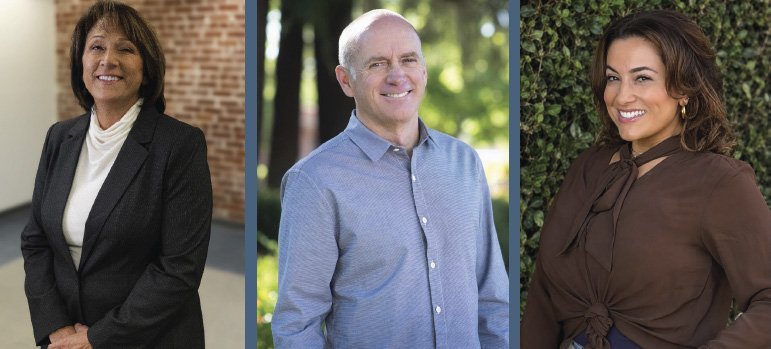
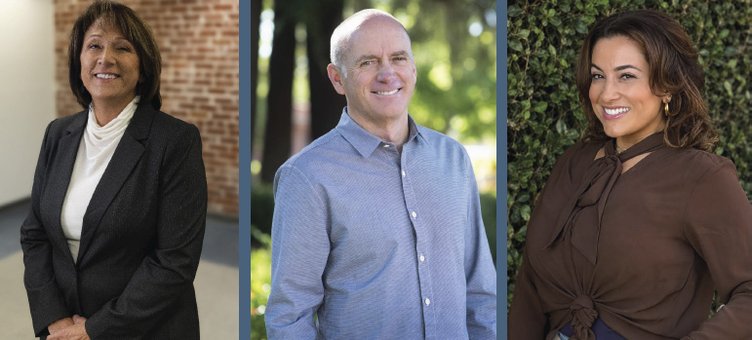
The face-off between incumbent Mayor Amy Bublak and challengers Jim Reape and Kelley Coelho is a joint venture of the Turlock Journal and the Modesto Focus, in partnership with CSUS.
The event is open to the public and there is no admission charge.
“Stan State is pleased to serve as a nonpartisan convener of conversations for the mayoral candidates to share their perspectives,” said Stanislaus State president Britt Rios-Ellis. “Many of our nearly 10,000 students call Turlock home, and our university community is closely connected to our beautiful city. Conversations like this create opportunities for our students, alumni, faculty, staff, and greater community to learn more about the issues shaping Turlock’s future.”
Kristina Hacker, the Journal’s managing editor, and Garth Stapley, a widely respected journalist in the region who now writes for the Focus, will serve as the moderators for the 90-minute event.
“We’re delighted that the Focus and the university have agreed to join us in bringing these candidates together and providing voters the opportunity to get unfiltered answers to their questions,” said Hacker. “Each election cycle, we strive to provide our readers the most unvarnished look at local candidates, and this debate is a prime example of our commitment to covering the issues in an impartial manner.”
The candidates will be allowed to give a two-minute opening statement – names will be drawn to determine the order – and then they will answer questions by the moderators and some from the audience. Answers to questions will be limited to one minute, with time for a 30-second rebuttal upon request.
Pencils and paper will be provided for the audience to write their questions. No oral questions from the audience will be permitted.
“Our mission is to provide high-quality local journalism to help connect communities in the Valley,” said Marijke Rowland, editor of the Modesto Focus, which began operations in the summer of 2025. “And that includes accountability journalism and hosting debates for local candidates. We’re excited to help give Turlock residents an opportunity to see the candidates discuss important issues affecting their city.”
The candidates already have met once on the dais, with all three taking part in the Be Informed candidates forum last month in Ceres that was sponsored by the Stanislaus Latino Chamber of Commerce.
Bublak, who has served on the on the Turlock City Council since 2008, is seeking her third term as mayor. Reape, a retired physician assistant, serves on the city’s planning commission. Coelho, a private investigator, has served one term on the Stanislaus County Veterans Commission. She has been the most vocal critic of the Bulak administration. She even filed a lawsuit against the city – in which Bublak is a named defendant – in federal court.
Bublak was first elected to the mayor’s office in 2018, when she defeated incumbent Gary Soiseth and former mayor Brad Bates in a hotly contested three-way race. Soiseth and Bates split about 13,000 votes nearly evenly, while Bublak tallied 8,300 votes. A fourth candidate, Jaime Franco, siphoned off another 930 votes.
Four years later, Bublak fended off a challenge from former councilmember Gil Esquer, grabbing 9,506 votes (52.9 percent) to Esquer’s 8,468 (47.1).
Coelho began this political cycle vying for Councilmember Kevin Bixel’s District 1 seat, only to change course in April and join the race for mayor. It’s unclear whether she will pull more votes from Reape or the incumbent.
The condition of Turlock’s roads is hot-button issue in the city, and figures to be a topic of discussion in the upcoming debate. During the Be Informed forum, the candidates were asked what priorities would they set for infrastructure improvements, and how would they fund them?
- Reape: “I’m very proud of our roads program and the work that’s been done. … Moving forward, I would like to see us prioritize our main corridors that everybody uses. I think preventative maintenance needs to be a focus moving forward. One concern I have is we’re making all these repairs now and all these surfaces have a similar life expectancy. Are we going to be in a similar position 30 or 40 years from now, where everything is falling apart at the same time? We need to have a funding program where we have a trust fund for roads maintenance in the future.”
- Coelho: “As I’ve been going out canvassing, there have been a lot of current road projects that have been going on. I think we definitely need to prioritize roads leading to public safety, say, for instance, Emanuel Hospital and things like that. I think we need to stop putting a temporary Band-Aid on the issue. I think we really need to hit the issue from the core and fix the roads the way they need to be fixed and stop wasting our taxpayer dollars on that.”
- Bublak: “Roads is probably a legacy that I will have … I took the time to find out what’s going on. Previously, all we did was talk about ‘OK, let’s fix a road.’ I was told by staff, ‘one a year.’ For 35 years, that’s what we did. We now have an engineer who’s in charge; he chooses the cluster area with a major thoroughfare. … We’re not putting lipstick on a pig any longer. We were doing that before. Now, it’s taking so much longer because we have to go in, storm drains, the sidewalks, all of that is being taken care of now. We’re not doing it unless we can do it right, and that’s why it’s taking longer, but it’s actually getting done for the first time.”